
Poor scheduling doesn't just cause inconvenience. It creates unexpected downtime, expensive emergency repairs, and real compliance exposure under federal inspection rules. This guide covers why preventive maintenance (PM) scheduling matters, the types of maintenance a complete program uses, warning signs to watch for, a sample scheduling framework, and the mistakes that quietly undermine even well-intentioned plans.
Key Takeaways
- Scheduled maintenance cuts breakdowns, extends bus lifespan, and keeps students safer on the road
- Complete PM plans combine routine, corrective, predictive, and major maintenance in one system
- Daily, weekly, monthly, and annual inspection layers form the backbone of any strong schedule
- Digital tools and GPS data help directors catch developing issues and document compliance
- Clear driver/technician roles and consistent logging are what actually make a schedule work
Why Preventive Maintenance Scheduling Matters for School Bus Fleets
A PM schedule is the connective tissue between safety, reliability, and district budgets. Skip it, and all three suffer eventually.
Daily operations improve immediately. Buses maintained on a predictable schedule break down less often mid-route. That means fewer late pickups, fewer stranded students, and a quieter phone line when parents stop calling to ask where the bus went.
Lifespan and replacement cycles benefit too. A bus serviced on schedule keeps components in service longer, which delays the point where a district has to replace an aging vehicle outright. That's real money deferred.
Compliance Isn't Optional
Federal rule 49 CFR Part 396 requires every motor carrier, school districts included, to systematically inspect, repair, and maintain vehicles, and to keep a documented schedule showing due dates for inspections and maintenance. The rule doesn't hand districts a universal mileage interval. It puts the burden on the fleet to build one that works.
That documentation requirement matters because inspection layers stack:
- Daily pre-trip driver inspections
- Post-trip defect reports (DVIRs) when problems are found
- A periodic inspection at least every 12 months
- A 90-day check on emergency exits and marking lights

Cost is the other half of the equation. Historical survey data from School Transportation News put average annual maintenance spending at roughly $5,500 per bus, across fleets both large and small.
That figure is planned, budgeted maintenance — not the cost of a bus stranded on a route that needs a tow, a rental substitute, and a rush-order part.
Types of Preventive Maintenance for School Buses
Preventive maintenance works best as a system, not a single tactic. Strong school bus programs layer four maintenance types so gaps in one do not turn into roadside failures.
Routine and Periodic Maintenance
Scheduled pre-trip and post-trip inspections, plus recurring upkeep, form the foundation.
- Daily: fluid levels, tires, lights, brakes
- Weekly/biweekly: battery condition, belts, hoses, filters
- Monthly/seasonal: undercarriage, HVAC, emergency exits and equipment
Smaller or newer fleets can sometimes run on routine maintenance alone for a while. But as buses age past the five- or six-year mark, that approach starts leaving gaps.
Corrective (Reactive) Maintenance
Corrective work kicks in when a driver reports a defect, an inspection fails, or something simply breaks. It is necessary, but leaning on it too heavily is a warning sign of a program in trouble.
Reactive-heavy fleets tend to see higher repair costs, more safety exposure, and more disrupted routes than fleets running mostly on schedule.
Predictive Maintenance
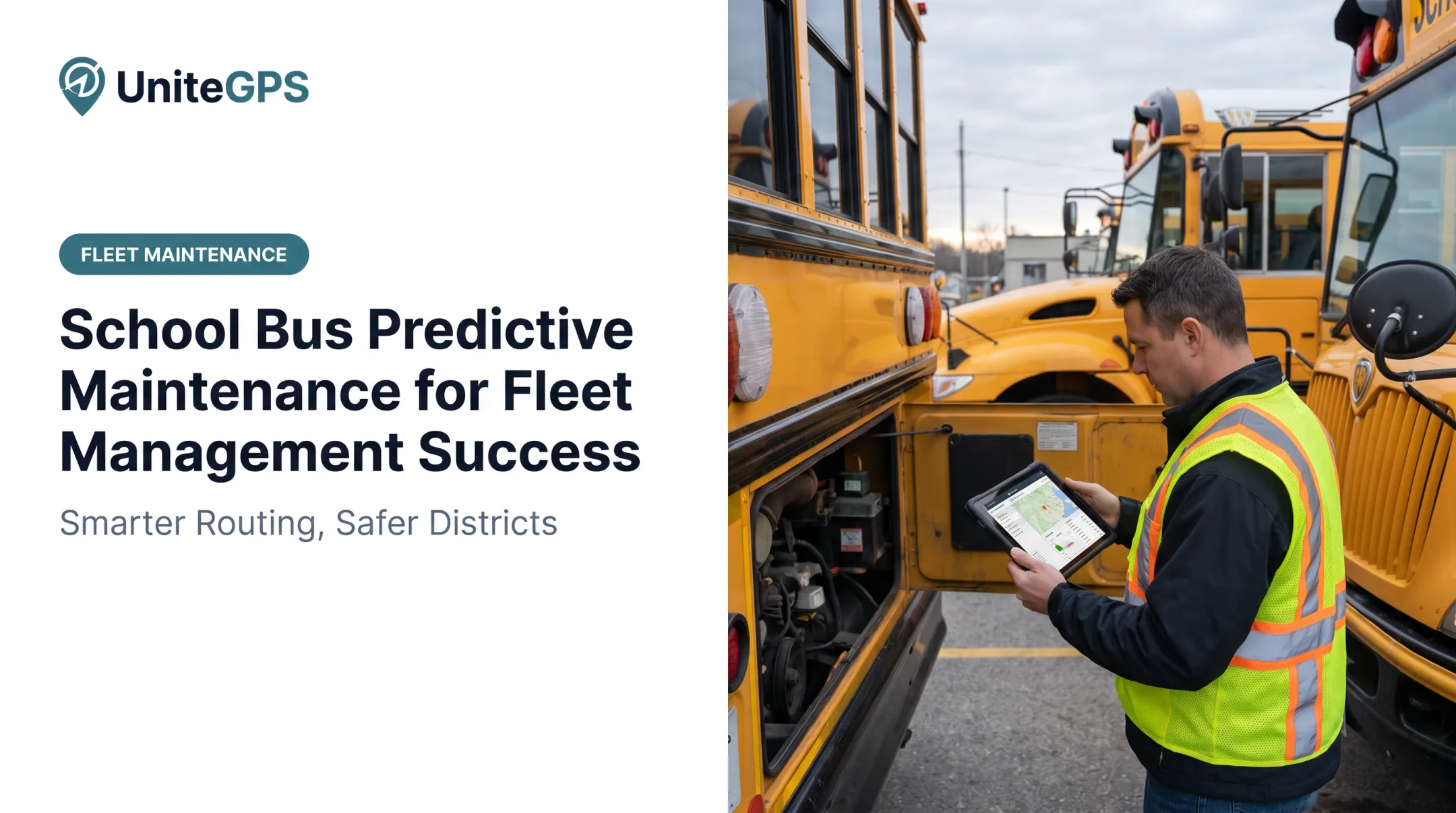
Predictive maintenance uses data, not guesswork, to catch problems before failure: telematics, mileage trends, idle time, and diagnostic codes.
GPS-based fleet tracking plays a direct role here. It gives transportation directors mileage and usage patterns they can use to fine-tune service intervals, rather than relying on a generic calendar.
Major or Overhaul Maintenance
Transmission overhauls, brake system rebuilds, and the annual DOT inspection belong in this category. The work is less frequent, but it protects the bus's long-term value and keeps it road-legal.

How to Tell When a School Bus Needs Maintenance Attention
Drivers and technicians catch most problems first. Acting on what they notice early is often the difference between a scheduled repair and a roadside call.
Performance changes:
- Dropping fuel efficiency
- Sluggish acceleration
- Braking that feels inconsistent or delayed
Unusual behavior:
- Abnormal noises or vibration
- Dashboard warning lights
- Irregular idling
Visible wear:
- Fluid leaks under the vehicle
- Worn tire tread
- Frayed belts
- Corrosion on the undercarriage
One-off symptoms matter, but patterns matter more. Recurring complaints deserve special attention. If more than one driver reports the same issue, or a temporary fix keeps failing, the underlying problem has not been solved—only postponed.

Building a School Bus Preventive Maintenance Schedule
Manufacturer recommendations, mileage, engine hours, and route conditions should all shape your intervals. A bus running a stop-and-go neighborhood route wears differently than one running highway miles to a regional school.
Use this baseline framework, then adjust intervals to match how each bus actually runs:
| Frequency | Tasks | Who's Responsible |
|---|---|---|
| Daily | Pre-trip/post-trip: brakes, tires, lights, fluids, emergency equipment | Driver |
| Weekly/Biweekly | Battery, belts, hoses, fluid top-offs, filters | Driver or technician |
| Monthly | Brake system, suspension, steering, undercarriage, HVAC | Trained technician |
| Annual | Full DOT inspection, emergency exits, major component service | Technician + inspector |
Adjust for route type. High-idle neighborhood routes put more wear on brakes and engines per mile than highway routes. Mixed fleets — diesel, propane, electric — also need separate service logic, since electric buses skip oil changes but still need brake and battery system checks.
Assign responsibility clearly. The biggest schedule failures usually trace back to one thing: nobody was sure who owned a task. Drivers own the daily inspection; technicians own everything requiring tools and training. Write it down.
Log everything digitally. Paper checklists get lost or backdated. Platforms like UniteGPS give transportation directors GPS-verified mileage and usage by route, bus, and category—not estimates from memory. Idle-time data flags vehicles running longer than they should, which feeds smarter service timing.

Digital pre-trip and post-trip reports with defect photos route straight to mechanics, replacing the paper trail that so often breaks down.
Common Preventive Maintenance Scheduling Mistakes to Avoid
A few habits quietly undo even solid PM schedules:
- Relying on mileage alone: A bus running 40 miles on a neighborhood route can wear harder than one running 80 highway miles. Idle time and engine hours matter too.
- Using paper logs: They get lost, filled out late, or skipped entirely during busy weeks.
- Blurring driver and technician responsibilities: When nobody's clearly on the hook for a task, it slips through.
Conclusion
For school bus fleets, preventive maintenance scheduling is foundational to student safety and to staying compliant with federal inspection rules. The strongest programs balance cost, reliability, and uptime by layering daily checks, periodic servicing, and major overhauls rather than leaning on any single approach.
Pairing that structured plan with reliable tracking tools, whether that's mileage reporting, idle-time alerts, or digital inspection reports, helps transportation departments get ahead of problems instead of reacting to roadside breakdowns.
Frequently Asked Questions
How do you create a preventive maintenance schedule for school buses?
Inventory your fleet, then set mileage- and time-based intervals from manufacturer guidance. Build inspection checklists, assign driver vs. technician duties, and track every service consistently.
What is typically included in a preventive maintenance schedule for school buses?
Daily pre-trip checks, periodic component inspections (weekly/biweekly), monthly mechanical reviews by technicians, and an annual DOT inspection covering major systems and emergency equipment.
What are the key types and elements of preventive maintenance for school buses?
Routine (time- or mileage-based), predictive, condition-based, and scheduled major service each play a role. A complete program combines these approaches rather than relying on one alone.
How often should a school bus be inspected?
Daily driver inspections are required every operating day, with periodic component checks weekly or biweekly and a full inspection at least annually, depending on state and federal requirements.
What's the difference between preventive and reactive bus maintenance?
Preventive maintenance is scheduled and proactive, catching issues before they cause failure. Reactive maintenance happens after something breaks, which typically costs more and disrupts routes.
How can technology help manage a school bus maintenance schedule?
GPS tracking and fleet management platforms provide mileage, idle-time, and usage data that inform smarter service intervals, along with digital inspection reports that document issues and route them straight to mechanics.