
Districts are moving past pandemic-era digitization. The next phase is AI-driven, interoperable, and built around trust. Many districts struggle with disconnected platforms, manual data entry, and rising security demands, all while budgets stay tight.
This post covers the top trends shaping 2026, what's driving them, how they're changing district operations, and what to watch next.
TL;DR
- AI, interoperability, and data privacy will dominate 2026 district strategy
- Districts are shifting from device deployment to holistic ecosystems spanning SIS, LMS, transportation, and safety
- Operational technology, including transportation and enrollment, is becoming as central as classroom tech
- Budget and equity constraints remain the biggest adoption barriers
Key Digital Transformation Trends for 2026
AI-Powered Personalized Learning and Administrative Automation
AI has moved from novelty to embedded feature. Teacher use jumped from 32% in 2024 to 61% in 2025, according to Education Week's 2026 report.
RAND's national survey found 54% of students and 53% of core-subject teachers now use AI for school-related tasks. Yet only 35% of district leaders have formalized AI training for students, per RAND's 2025 research.
Real district use looks like:
- Arizona's Department of Education invested $1.9M in FY2025 for Khanmigo AI tutoring, providing 24/7 high-dosage support
- Dublin City Schools reports 90%+ teacher adoption of MagicSchool's AI tools for lesson planning and feedback
Administrative automation is following the same curve. Districts are using AI-adjacent tools for communications drafting, report generation, and grading support—freeing teacher time for instruction instead of paperwork.

Interoperable Data Ecosystems (SIS, LMS, and Beyond)
Districts are consolidating scattered platforms around a central data hub, often using the OneRoster standard for secure roster and grade exchange, per 1EdTech. PowerSchool's Infinite Campus-to-Schoology integration is a good example: it provisions schools, courses, and enrollments automatically, then syncs grades back. Attendance still requires a separate process in most current integrations.
Why does this matter? Manual data entry is where errors and staff hours disappear. Automatic syncing means:
- Fewer duplicate records across systems
- More accurate reporting for state and federal compliance
- Less time spent reconciling spreadsheets between departments
The same expectation now reaches operations outside the classroom. Transportation platforms—including UniteGPS Crosswalk—pull student names, addresses, grades, and route assignments directly from the district SIS (PowerSchool, Skyward, or Infinite Campus). When a student moves or changes schools, routes and ridership records update automatically instead of a staffer re-entering everything by hand.

Smart, Data-Driven Operations Beyond the Classroom
Transformation isn't staying inside the classroom. Transportation, facilities, enrollment, and safety are all getting the same data-driven treatment.
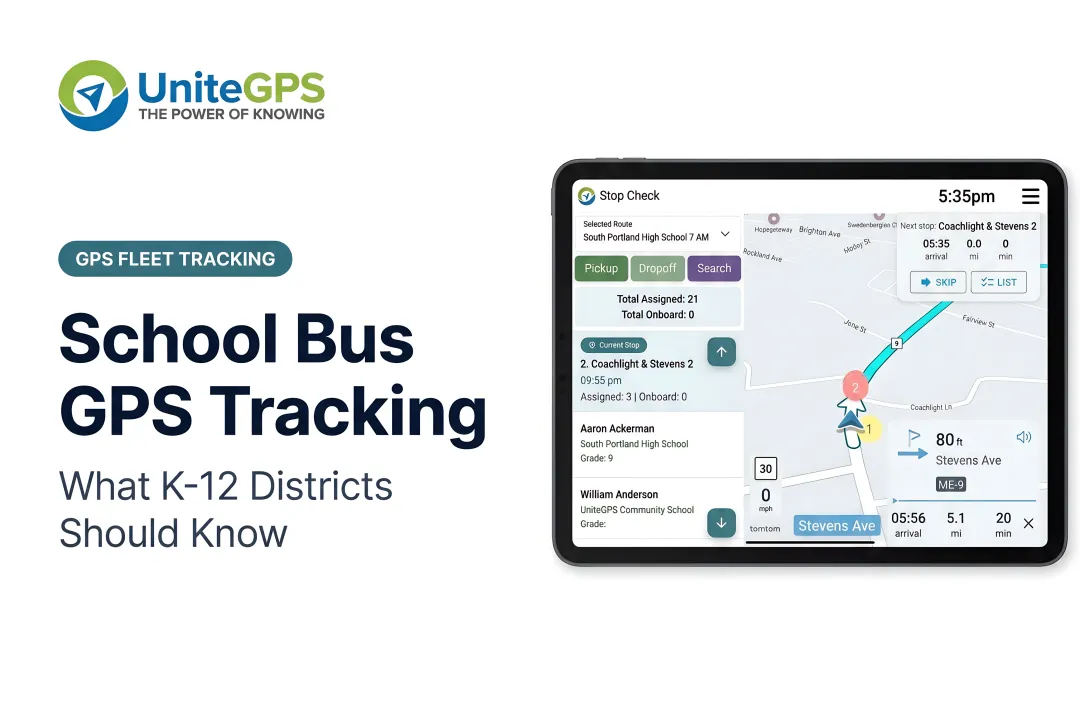
Real-time GPS bus tracking is a clear example. A 2020 School Transportation News report described one district cutting parent phone calls by 75% after deploying bus-tracking software. That figure is a single case, not a national benchmark—but the pattern holds: when parents can see the bus themselves, calls to the transportation office drop.
Enrollment is digitizing too. PowerSchool customer examples, including Teton County School District 1, report saving over 20 hours and several thousand dollars through online enrollment versus paper-based processes.
Every hour a transportation coordinator saves on parent calls—or an enrollment clerk saves on paperwork—is an hour that can go back to instructional priorities.
Elevated Data Privacy, Security, and Compliance
More digital data means more exposure. The 2025 CIS/MS-ISAC K-12 Cybersecurity Report tracked over 5,000 K-12 organizations and found 82% experienced cyber-threat impacts, with 8,100 confirmed incidents between mid-2023 and end of 2024. The U.S. Department of Education separately notes districts face an average of five cyber incidents per week.
Districts are responding with:
- Vendor vetting rubrics: Deer Park ISD requires FERPA/COPPA checks, breach notification terms, and audit rights before any edtech contract
- Managed detection and response (MDR): Elmbrook Schools (WI) adopted 24x7 MDR after a 2022 incident exposed gaps in internal coverage
- Approved-app lists: 59% of districts now use one, up from 42% in 2023, per CoSN's 2025 report
Procurement teams are asking harder questions in RFPs: where is data stored, who has access, and what happens to it after a contract ends.

Equity-Focused and Accessible Technology Adoption
The digital divide hasn't closed. It has shifted shape. NCES data shows 97% of children ages 3–18 have home internet access, but that rate drops to 89% for American Indian/Alaska Native children and 94% for kids in the lowest income quarter.
Bandwidth gaps persist too: CoSN reports only 7% of districts say all students have adequate home bandwidth.
Districts are closing gaps with:
- Screen readers and captioning tools for students who are blind, low-vision, or deaf/hard of hearing
- Adaptive learning apps built into IEP accommodations
- Mobile-friendly enrollment and communication tools that don't assume every family has a home computer
Section 504 and Title II require equal digital access, per the U.S. Department of Education, making this a compliance issue as much as an equity one.
What's Driving These Digital Transformation Trends
Mature technology, tighter budgets, and rising family expectations are accelerating digital transformation across districts. CoSN found 94% of edtech leaders now see AI as a net positive for education, with 80% already running generative-AI initiatives.
Other drivers include:
- Cloud and mobile-first platforms have lowered the technical barrier to entry for smaller districts.
- Parent expectations for real-time visibility (bus location, grades, attendance) keep rising, shaped by consumer apps they use daily.
- Cost pressure pushes districts toward automation that saves staff hours rather than adding headcount.
- FERPA and compliance requirements push investment toward certified, auditable platforms.
- Competitive pressure among neighboring districts to modernize and retain enrollment.
How These Trends Are Impacting School Districts
These trends hit operations, budgets, and workforce roles at the same time—and transportation departments feel all three.
Operational Impact
Manual, paper-based processes are giving way to automated workflows across departments. Transportation route planning shows the shift clearly: platforms that sync with SIS data drop the need to re-enter rosters when enrollment changes and recalculate stop times when routes shift.
Business Impact
Budgets are moving away from one-off hardware buys toward software subscriptions and vetted vendor partnerships. That reallocation typically means:
- Lower upfront capital tied up in devices
- Predictable monthly operating costs instead of large purchases
- Room to add capabilities only when the district is ready
UniteGPS reflects the pattern: districts can start with Routing Essentials at $49/month (no hardware) and add GPS tracking or tablet-based ridership tools as needs and budgets allow.

Workforce Impact
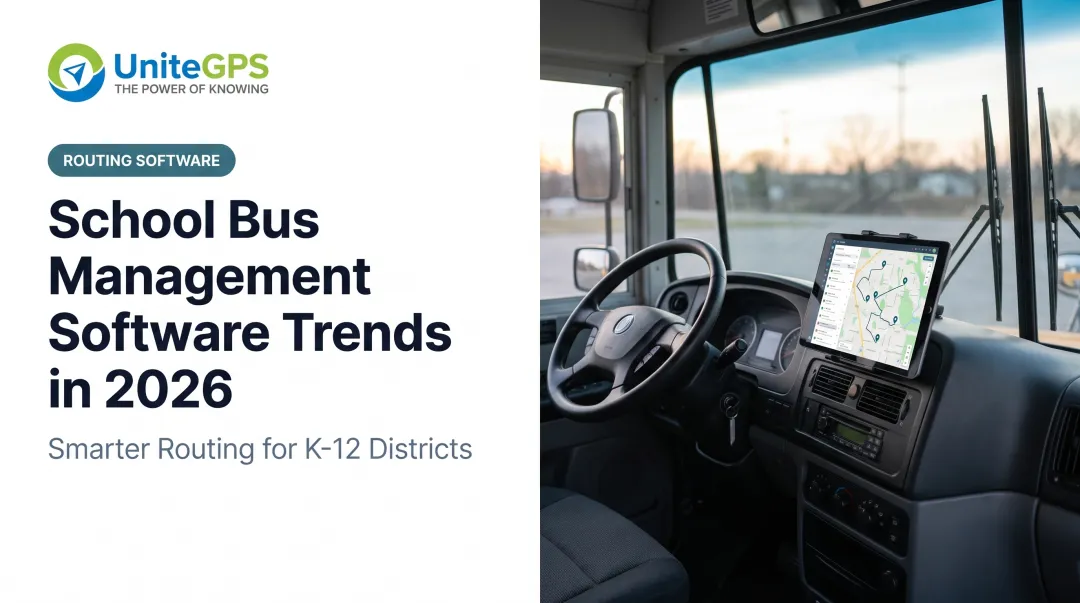
Staff need new skills—especially data literacy and comfort with AI tools. At the same time, automation is cutting day-to-day burden in practical ways. Turn-by-turn navigation with student names and stop-by-stop instructions lets substitute drivers run unfamiliar routes without paper maps or a veteran driver's memory.
Future Signals to Watch Beyond 2026
Looking past near-term trends, a few longer-horizon shifts are already taking shape. Districts should watch for:
- AI agents for multi-step admin work: scheduling, reporting, and family communication chained together, not just single-task tools
- Deeper interoperability connecting instructional, administrative, and operational systems into one true ecosystem, not just SIS-to-LMS
- Tighter regulation around student data privacy and classroom AI use at both state and federal levels
- Long-term vendor partnerships preferred over quick software fixes, as districts favor vendors free from private-equity pressure to extract short-term value
Conclusion
AI, interoperability, and operational digitization are reshaping how districts function, both inside and outside the classroom. Transportation, enrollment, and safety systems are no longer afterthoughts; they're core infrastructure.
Districts that adapt early gain real advantages: efficiency, safety, and family trust. The ones that wait tend to inherit disconnected systems and manual workarounds that get harder to unwind each year.
Strategic foresight matters, but so does picking the right technology partners. As 2026 approaches, that choice will separate districts that run smoothly from those still patching together spreadsheets and phone calls. For transportation teams, partners like UniteGPS turn routing, live tracking, and parent communication into one workable system—so daily operations stay visible, safer, and easier to manage.
Frequently Asked Questions
What is digital transformation in school districts?
It's the integration of technology across instruction, administration, and operations to improve outcomes and efficiency. This goes beyond devices to include data systems, security, and connected operational tools.
What are the key pillars of digital transformation in school districts?
Four pillars stand out: data integration (SIS/LMS), instructional technology (AI tools), security and compliance (FERPA), and operational systems (transportation, enrollment, facilities).
How is AI being used in K-12 school districts?
AI supports personalized tutoring, grading assistance, and lesson planning for teachers. It's also automating administrative tasks like communications drafting and reporting.
What are the biggest barriers to digital transformation in schools?
Budget constraints top the list, followed by the digital divide affecting home internet and device access. Staff and parent resistance to new tools also slows adoption.
How does digital transformation improve school transportation and safety?
Real-time GPS tracking and ridership scanning give parents and administrators live visibility into bus location and student boarding. SIS-synced routing also keeps route data current automatically, reducing manual errors and parent calls.
How can districts measure the success of their digital transformation efforts?
Track engagement, attendance, and instructional time saved alongside operational metrics like enrollment-processing time and staff hours reclaimed. Chronic absenteeism data and parent-call volume are practical benchmarks many districts already use.