Bus driver shortages, tightening budgets, and outdated routing tools have turned a logistical function into a daily crisis for many districts. 65% of transportation officials named driver shortages their top concern in a joint NAPT/NASDPTS/NSTA survey, and the ripple effects reach far past the bus loop.
This article breaks down what's actually causing the strain and what districts are doing about it, from policy tweaks to purpose-built software.
Key Takeaways
- Driver shortages and budget constraints rank as the top challenges districts report nationwide
- Missed rides disrupt attendance, family work schedules, and access to school services
- Route optimization, GPS tracking, ridership scanning, and SIS sync fix the root operational gaps
- Districts can roll out these tools in stages, starting with the most urgent pain point
Understanding the Scope of Student Transportation Challenges
Transportation problems used to mean an occasional late bus. Now they're tied to attendance records, family income, and equity gaps between districts.
The numbers back this up:
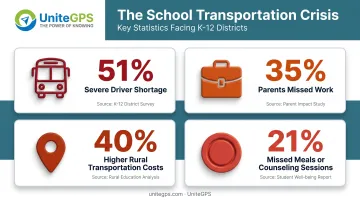
- 51% of respondents in a national survey called their driver shortage "severe" or "desperate" (NASDPTS, 2021)
- 35% of parents reported missing work, and 11% said they lost a job entirely, because of school transportation breakdowns (2025 AP-NORC survey)
- 21% of parents said their child missed school meals or counseling services due to transportation gaps, per the same survey
Rural Districts Feel It Hardest
Rural systems spend roughly 40% more per student on transportation than city or suburban districts, according to peer-reviewed research published in Transportation Research. Longer routes, sparser stops, and fewer backup drivers compound every other problem on this list. Low-income families in these areas often have no alternative when a bus doesn't show.
Common Root Causes Behind the Crisis
Three forces feed each other:
- Driver shortages force route consolidation, which means longer rides and later pickups
- Rising costs limit how many new drivers or vehicles a district can add
- Manual routing systems waste staff hours that could go toward solving the first two problems
Disconnected systems make this worse. When a Student Information System doesn't talk to routing software, transportation staff re-enter student data by hand every time a family moves or a student changes schools.
Transportation directors working with UniteGPS describe the same pattern: uploading rosters manually and redoing stop assignments whenever enrollment shifts. That work eats hours and adds no real value.
The Ripple Effects on Students and Families
A late bus isn't just an inconvenience. Long rides and unreliable pickups compound the damage for students and families.
Longer commutes hurt more than patience:
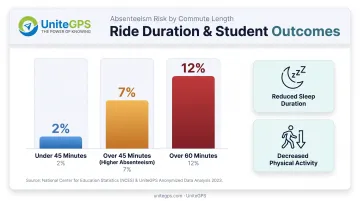
- Rides over 45 minutes tie to higher chronic absenteeism in district-choice schools, according to IES research
- Students with rides longer than an hour showed a 12% absenteeism rate, according to Education Week
- Long commutes correlate with reduced sleep and less physical activity, according to a peer-reviewed study in the Journal of the American Planning Association
Communication gaps make the frustration worse. When parents have no idea where the bus is, they call the office. Multiply that by every family on a route, and transportation staff spend their mornings on the phone instead of solving the actual delay.
There's a safety layer too. Without a clear boarding and exit record, districts can't always confirm which students got on or off a given bus. That's a real concern for younger riders and students with special needs—a missed check-in is a safety gap, not a clerical one.
Proven Solutions Districts Are Adopting
No single fix solves all of this. Most districts stack a few approaches.
Lower-Tech, Policy-Driven Fixes
Centralized bus stops reduce the number of stops a route needs, cutting ride time without adding buses. Pairing this with pedestrian and bike infrastructure near schools takes pressure off routes entirely for students who live close enough to walk safely.
Route Optimization Software
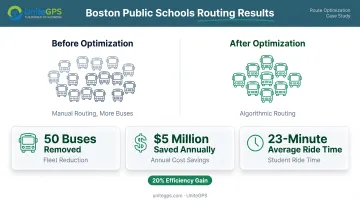
Boston Public Schools used an algorithmic routing system that:
- Removed 50 buses from the fleet
- Saved $5 million annually
- Held average ride time to about 23 minutes
That's according to peer-reviewed research published in PNAS. The optimized route map, generated in 30 minutes, was 20% more efficient than the district's manually built plan. Savings like that don't require growing the fleet. They come from using the existing one better.
Real-Time Tracking, Ridership Logs, and SIS Sync
Live tracking gives parents a direct answer without calling the office. UniteGPS's "Find My Routes" feature, for example, lets a parent check their child's assigned bus, stop, and expected arrival, with GPS positions updating every five seconds. That visibility cuts the call volume that overwhelms transportation offices during delays.
On the bus, tablet-based boarding and exit logs solve two problems at once:
- Safety accountability — staff can confirm exactly which students boarded and exited each bus
- Medicaid documentation — scan-verified rides for IEP-eligible students create timestamped records that support reimbursement claims
Those tools get sharper when enrollment data stays current. Connecting a district's Student Information System directly to routing software eliminates the manual re-entry that eats staff time. When a student moves or changes schools, the update flows automatically into stop assignments and ridership records instead of requiring someone to redo it by hand.
How UniteGPS's Crosswalk Platform Addresses These Challenges
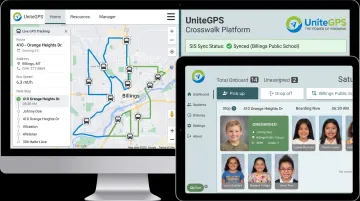
UniteGPS built Crosswalk K-12 around a simple idea: transportation departments shouldn't need five separate logins to run one bus route.
The platform combines routing, GPS tracking, ridership scanning, and SIS integration in a single system. Every major feature, from route optimization to barcode-based ridership tracking, traces back to a specific request from a transportation director. When districts said, "we need to know who actually rode each bus," that became timestamped boarding records tied to parent notifications and Medicaid documentation.
What makes this practical for understaffed departments:
- 90-day free trial with no credit card required—UniteGPS builds the routes during setup so district staff don't have to
- Unlimited live support with no ticket queues, meaning direct access to transportation specialists
- FERPA compliance built in from the start, protecting student data across every tier
UniteGPS has been bootstrapped since 2014, shaped by feedback from over 100 school districts rather than private-equity pressure to pack on features for a quick exit. Benton Community School District's transportation director said the platform simplified route setup and helped settle parent disputes about missed stops—the daily friction understaffed teams deal with most.
Building a Long-Term Transportation Strategy
Districts don't need to buy everything at once. The smartest approach starts with the single biggest pain point.
- Identify your most urgent gap — Is it driver shortages forcing route cuts? Parent complaints flooding the office? Manual data entry eating staff hours? Start there.
- Evaluate partners on reliability, not just price — A vendor's support responsiveness matters more six months in than the sticker price does on day one.
- Loop in drivers, parents, and administrators — The people using the system daily will spot friction points before a spreadsheet ever will.
A tiered platform makes that phased path practical. With UniteGPS, districts can start on Routing Essentials for route optimization and SIS sync, then add GPS tracking or ridership scanning through the Tablet Suite as budget and need allow. Data and routes carry forward with every upgrade, so nothing gets rebuilt from scratch.
Frequently Asked Questions
What are common student transportation problems?
Driver shortages, budget constraints, unreliable routing, and communication gaps between schools and families top the list. These issues compound, with staffing shortages forcing route consolidation that leads to longer, less predictable rides.
What solutions address student transportation problems?
Route optimization software, real-time GPS tracking, ridership tracking, and SIS integration are the main technology fixes. Each targets a different root cause, from wasted mileage to manual data entry errors.
How do bus driver shortages affect student attendance?
Shortages force route cuts and delays, which lead to tardiness and missed class time. Longer consolidated routes are also linked to higher chronic absenteeism, particularly for rides exceeding 45 minutes.
Can technology really reduce school transportation costs?
Yes. Optimized routing reduces mileage and driver hours needed per route, freeing budget for other priorities. Boston Public Schools cut 50 buses and saved $5 million annually using algorithmic routing.
What is ridership tracking and why does it matter?
Ridership tracking is a tablet-based system that logs student boarding and exit events, typically via barcode scan. It improves safety accountability and creates the documentation districts need for Medicaid transportation reimbursement.
How can parents get real-time updates on their child's bus?
GPS-based parent apps show live bus location, assigned stop, and expected arrival time. This reduces uncertainty for families and cuts the volume of calls flooding transportation offices during delays.