Chris Bunnell knows that feeling. Back in 2014, he watched his own kids stand outside in the freezing Maine cold with no idea when their bus would actually show up. That frustration led him and two co-founders to build what became UniteGPS. The same problem shows up in Wyoming, just with more snow and longer distances between stops.
GPS bus tracking now gives districts real-time visibility into where every bus is, whether every student boarded safely, and how routes can run more efficiently. This article covers how the technology works, why it matters specifically for Wyoming's rural geography, what to look for in a system, and how to get one running in your district.
Key Takeaways
- Real-time GPS tracking cuts parent calls to transportation offices and delivers reliable ETAs during weather delays
- Wyoming's spread-out rural routes and harsh winters make accurate ETAs far more valuable than in dense suburban districts
- Modern platforms put routing, ridership tracking, and SIS integration in one system instead of disconnected tools
- Districts can run a full platform free for 90 days before committing
Why Wyoming School Districts Need Bus Tracking Technology
Wyoming has one of the most rural student populations in the country. NCES placed the state in the 15–24% remote-rural enrollment band back in 2003–04, and little suggests that's changed much since [1].
That means longer routes, fewer alternative pickup options, and buses covering highway miles a suburban district would never see.
Add winter into the mix. Many Wyoming districts operate under formal weather-closure guidelines that weigh road conditions and temperature before buses run at all.
When conditions are borderline, a bus might leave the barn 20 minutes late, or a route might change on the fly. Without GPS visibility, parents are left guessing.
Common gaps in districts still relying on manual dispatch:
- Drivers radio in delays, but that information rarely reaches parents directly
- Paper attendance logs make it hard to confirm which students actually boarded
- Substitute drivers unfamiliar with rural routes rely on memory or printed directions
- Transportation staff spend hours each week fielding "where's the bus" calls
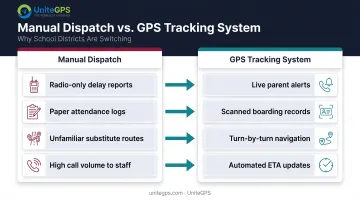
This isn't unique to Wyoming. Rural districts in Michigan and Iowa face the same mix of long routes and thin staffing, and many already use GPS-based systems to close these gaps. Wyoming districts can close them the same way—with live visibility instead of radio tag-ups and phone trees.
How Bus Tracking Systems Work
A modern bus tracking platform ties together GPS hardware, ridership tools, and live data feeds so transportation offices, drivers, and parents see the same picture.
The GPS and Routing Layer
A small GPS device rides on each bus, sending location updates back to a central platform. UniteGPS's system, for example, refreshes bus location every 5 seconds and keeps tracking even when the ignition is off. That data feeds:
- A parent-facing mobile app showing live location and ETA
- A dispatcher dashboard for the transportation office
- Route-adherence reports comparing planned stops against actual driving
Student Ridership Tracking
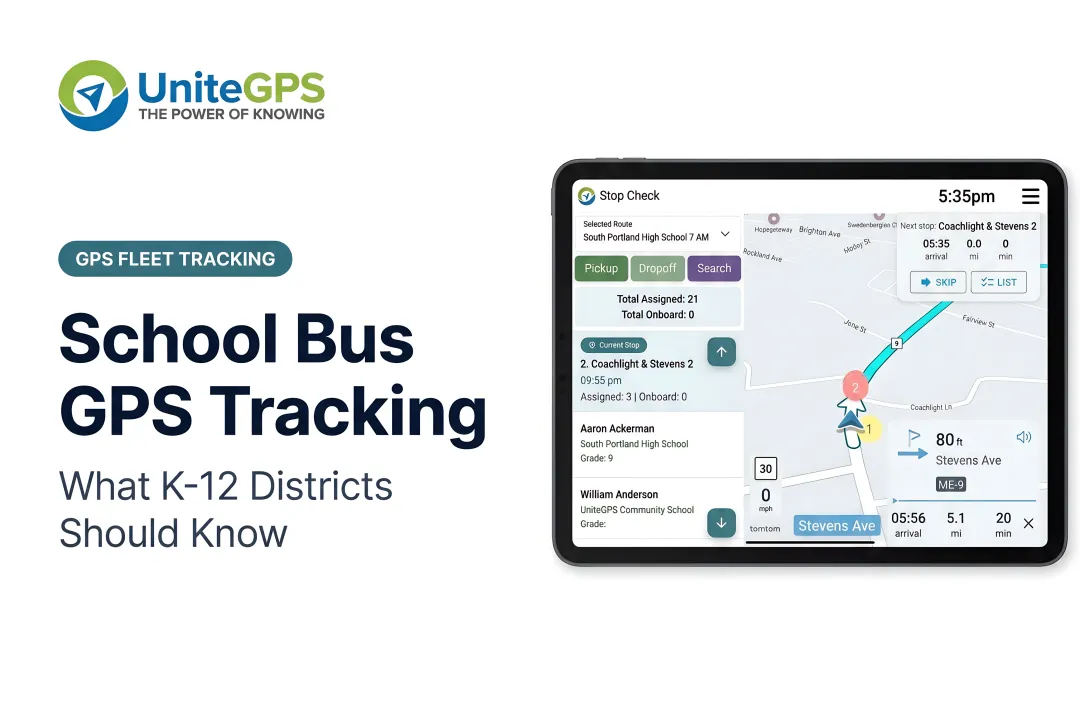
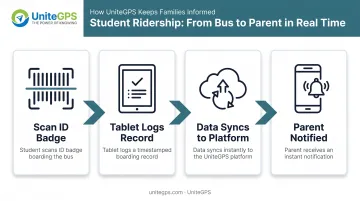
Instead of a paper roster, drivers use a tablet mounted in the bus. Students scan a barcode on an ID card (or even a photo of the code) when boarding and exiting. This creates a timestamped record of who rode which bus, and when.
- Notifications alert parents when their child boards and again when they arrive
- Flags for forgotten ID cards or students riding a different bus than assigned
- Automated alerts also cover delays, route changes, or early dismissals
Keeping Rosters Current
Nobody wants to manually re-enter student addresses every semester. SIS synchronization pulls enrollment, address, and school-assignment data directly from platforms like PowerSchool, Skyward, or Infinite Campus, so routing and ridership tools stay current automatically.
Driver Navigation on Rural Routes
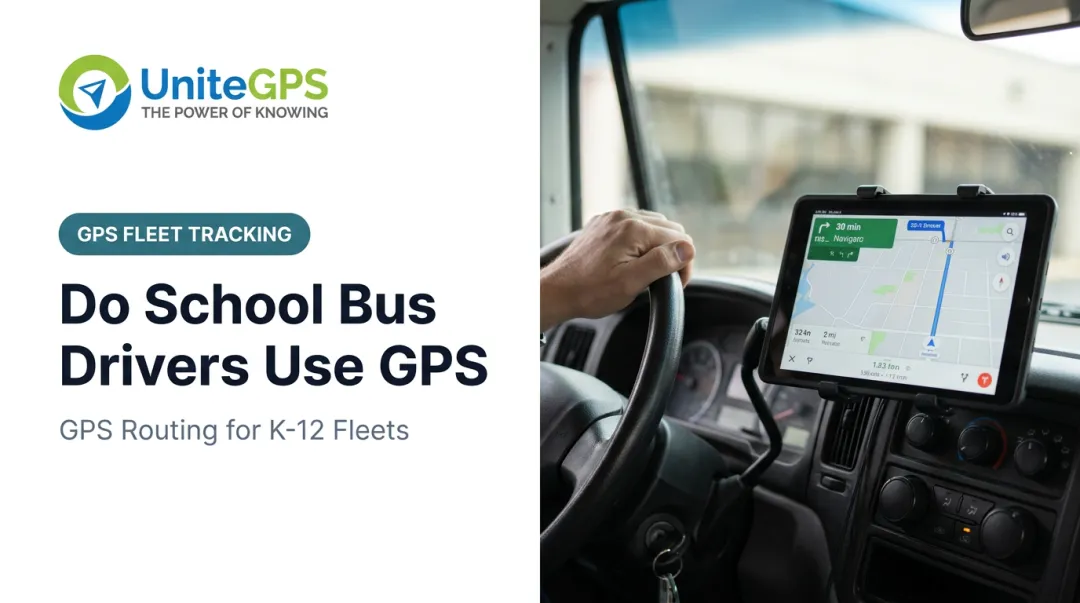
For substitute or new drivers unfamiliar with rural county roads, turn-by-turn navigation on the tablet removes the guesswork. That matters when your usual driver calls in sick during a storm and the route still has to run on time.
Key Benefits for Wyoming Districts and Families
Wyoming districts and families gain concrete advantages from modern bus tracking:
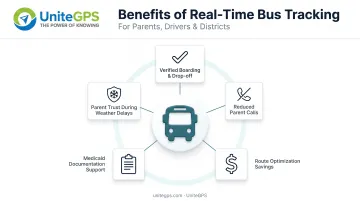
- Verified boarding and drop-off means a district knows immediately if a student misses their stop, rather than finding out secondhand at pickup time
- Instant bus location and ridership checks cut "where's my kid" calls so staff spend less time on the phone and more time on the road
- Benton Community School District's transportation director said quick ridership verification made a "huge difference" answering parent questions in daily operations
- Route optimization saves real money: Boston Public Schools cut its fleet 18% (from 650 buses to 530), saving an estimated $5 million in initial rollout [2]
- Sparse Wyoming rural routes stand to gain even more from tighter, better-planned mileage
- Scan-verified boarding and categorized mileage strengthen Medicaid paper trails for special education transport (CMS requires a written IEP, medical necessity, and same-day proof of service [3]), though ridership data alone does not establish eligibility
- Live maps build parent trust when a whiteout on Highway 191 runs a route late
What to Look for in a Bus Tracking Solution
Not every platform is built the same way. For Wyoming districts comparing options, a few things matter more than flashy marketing copy.
Data Privacy and FERPA Compliance
Student boarding and location data counts as protected information under FERPA. Look for vendors that:
- Act as a "school official" with a formal Data Processing Agreement
- Encrypt data in transit and at rest
- Require multi-factor authentication and role-based access
- Guarantee your district retains full ownership of its own data
Real Integration, Not Just Buzzwords
GTFS compatibility helps with public transit data sharing, but it isn't the same as SIS integration, and it doesn't touch student privacy requirements. Ask vendors exactly which SIS platforms they connect to and which fields sync automatically.
Support That Doesn't Leave You Waiting
Small district IT teams don't have time to sit in a ticket queue. Live, unlimited support from people who understand K-12 transportation (not a generic help desk) matters more once you're mid-storm and a route needs adjusting fast.
When a vendor is built for K-12, those three boxes—FERPA handling, real SIS sync, and live support—tend to come together. UniteGPS's Crosswalk platform combines GPS tracking, ridership scanning, routing, and SIS sync in one FERPA-compliant dashboard, with unlimited live support. It includes a 90-day free trial (no credit card), and UniteGPS staff build your routes and connect your SIS data during onboarding.
Steps to Implement a Bus Tracking System in Your District
Wyoming districts rarely need a multi-year IT project to get live tracking. A short, phased sequence keeps the rollout realistic for lean transportation teams.
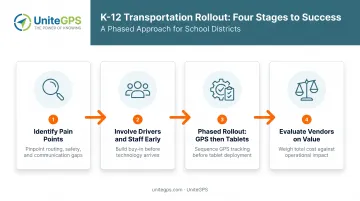
- Identify your pain points first. Is it inefficient routing, constant parent calls, or weak ridership visibility? Different systems solve different problems—match the tool to the gap.
- Bring drivers and the transportation director in early. They know which rural routes are hardest to run and which features will actually get used day to day.
- Roll out in phases. Start with GPS and routing before tablets and student scanning. That keeps the learning curve manageable for staff and drivers.
- Evaluate vendors on more than sticker price. Compare trial length, how fast support answers real questions, and total cost of ownership (software, hardware, and data plans), not just the monthly rate.
Frequently Asked Questions
Is there a GPS tracking system for school buses?
Yes. Modern platforms pair GPS hardware on each bus with a mobile app, letting parents and administrators see real-time location and estimated arrival times from a phone or dashboard.
How do parents track kids on the school bus?
Student ridership tracking uses ID badges or barcodes scanned when boarding and exiting. That data syncs to a parent app and district dashboard, showing exactly when a child got on or off.
Do rural Wyoming school districts already use bus tracking apps?
Some do. Lincoln County School District 2 in Wyoming uses an app that lets families track buses live and receive schedule-change notifications. Adoption is growing across rural states generally.
How much does a school bus tracking system cost?
Expect roughly $49/month for basic routing on small fleets, or about $25–$39 per bus monthly for GPS tracking and tablet tools (hardware may be extra). UniteGPS includes a 90-day free trial with routes built at no cost so districts can test before buying.
Can bus tracking systems help with special education transportation compliance?
Yes. Scan-verified boarding records and mileage reports support Medicaid billing documentation. A written IEP and documented medical necessity are still required for eligibility.
What happens if a bus loses GPS signal in remote areas?
Most systems resume tracking automatically once signal returns—important on Wyoming's remote highway stretches with spotty cellular coverage. Ask vendors how they cache and backfill location data offline during your evaluation.