Introduction
Picture this: a bus running 12 minutes late on a cold morning, a parent calling the transportation office for the third time, and a driver navigating a construction detour with no updated guidance. Three separate problems, one root cause: every decision made without current information.
School transportation has long operated on fixed plans built weeks in advance and updated infrequently. When reality diverges from those plans — and it always does — staff scramble reactively rather than responding with confidence.
Real-time data gives transportation teams the ability to see what's actually happening, respond before problems escalate, and build routes that improve over time. That's a different operational posture than a map with moving dots.
This article covers what real-time data actually means in school transportation, how it changes daily scheduling decisions, why ridership data is the most overlooked input, and how today's operational data becomes next year's planning advantage.
Key Takeaways:
- Real-time data includes GPS location, student boarding events, ETAs, and SIS enrollment
- Live data turns reactive fire-fighting into proactive operations management
- Ridership scanning reveals who's actually riding, not just who's scheduled to ride
- Live bus tracking for parents directly reduces inbound calls to the transportation office
- Historical operational data makes annual route planning faster and more defensible
The Problem with Static School Bus Scheduling
Traditional school bus routes are built as fixed plans. A routing coordinator designs them around assumed traffic patterns, expected ridership, and set school times — then those plans go live and largely stay unchanged until something forces a revision.
That assumption-based foundation cracks quickly once the school year starts.
How Disruptions Cascade
A single delayed stop doesn't stay isolated. Every downstream stop on the same route absorbs that delay, compounding minute by minute. Drivers have no reliable way to communicate what's happening to dispatch in real time. Administrators only find out about problems when frustrated parents call in — by which point the damage is already done.
Driver shortages compound the issue. A 2021 survey by NAPT, NASDPTS, and NSTA found that 51% of respondents described their driver shortage as "severe" or "desperate," with 78% reporting the situation was worsening. When sub drivers cover unfamiliar routes with no dynamic navigation, delays and missed stops become routine rather than exceptional.
Service alterations caused by staffing gaps were reported across all regions — 80% in the West, 79% in the Northeast — affecting elementary routes at a 91% rate. Static schedules have no mechanism to absorb that kind of ongoing disruption — and the staff left managing the fallout pay the price.
What Staff Are Left Doing
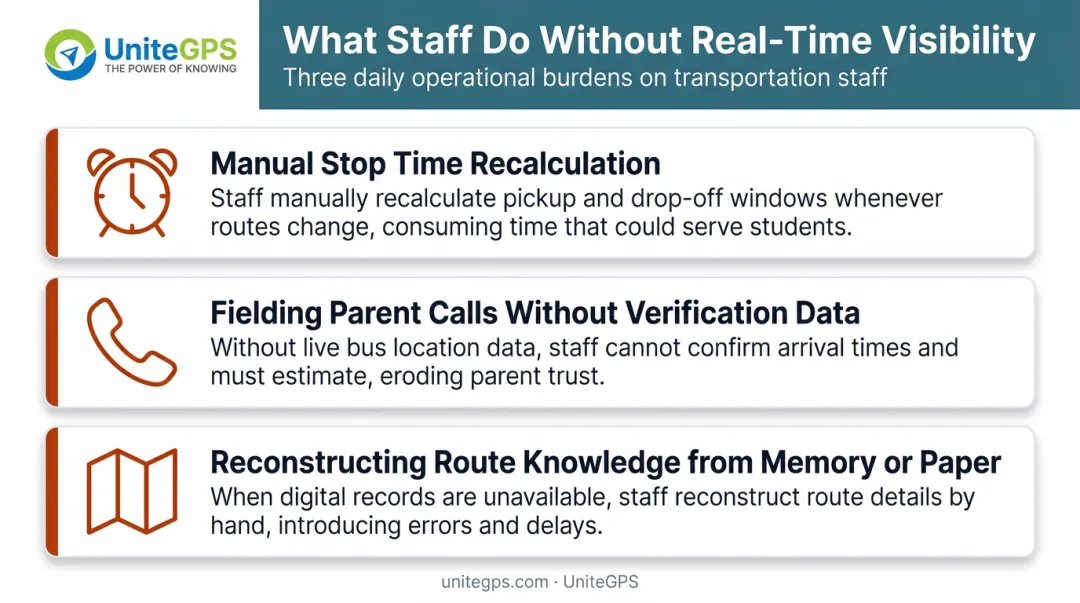
Without real-time visibility, transportation staff spend their days reacting. Common daily tasks become time sinks:
- Manually recalculating downstream stop times whenever a single stop changes
- Fielding parent calls about missed buses with no data to verify what happened
- Reconstructing route information held in one person's memory or on paper maps
That last point proved especially common. Early conversations UniteGPS had with transportation directors revealed that route knowledge was often held by a single person, making every operation fragile and every unplanned absence a potential crisis. Districts moving off paper systems described what they actually needed: to know where buses were, who was on them, and whether stops were being completed.
What "Real-Time Data" Actually Means in School Transportation
"Real-time data" in school transportation gets reduced to GPS tracking in most conversations. That framing misses most of what makes it operationally useful.
The Full Data Picture
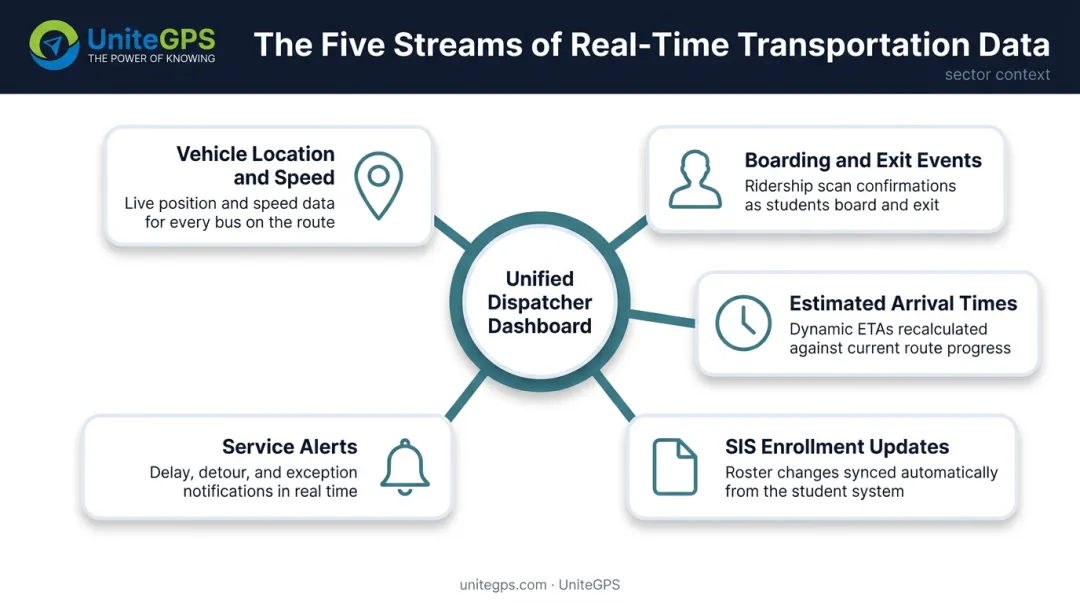
Real-time school transportation data encompasses multiple live streams:
- Vehicle location and speed — where each bus is right now, updated continuously
- Student boarding and exit events — who scanned on or off, at which stop, at what time
- Estimated arrival times — forward-looking predictions based on current route progress
- SIS enrollment updates — new students, address changes, and disenrollments feeding routing automatically
- Service alerts — dispatched notifications to drivers, parents, and staff about delays or changes
The NYC Department of Education captures this well in its Transportation Modernization Plan, which identifies five integrated focus areas: routing, fleet, GPS tracking, ridership, and real-time communications. Each stream feeds the others.
Historical vs. Predictive Data
There's a critical distinction between data that tells you where a bus was and data that tells you where it is right now — and where it will be in five minutes.
Historical GPS breadcrumbs are useful for post-run analysis. Predictive arrival estimates, built from live position data within the context of a planned route, are what dispatchers need mid-run. A route-aware system understands that a bus approaching a stop on its planned path is different from a bus that happens to be geographically nearby. That distinction drives ETA accuracy.
Why Integration Is the Real Differentiator
Predictive data only gets you so far if it lives in isolation. Data siloed across separate systems — GPS in one platform, ridership in another, enrollment in a third — still forces manual reconciliation. Staff are back to reacting, just with slightly better tools.
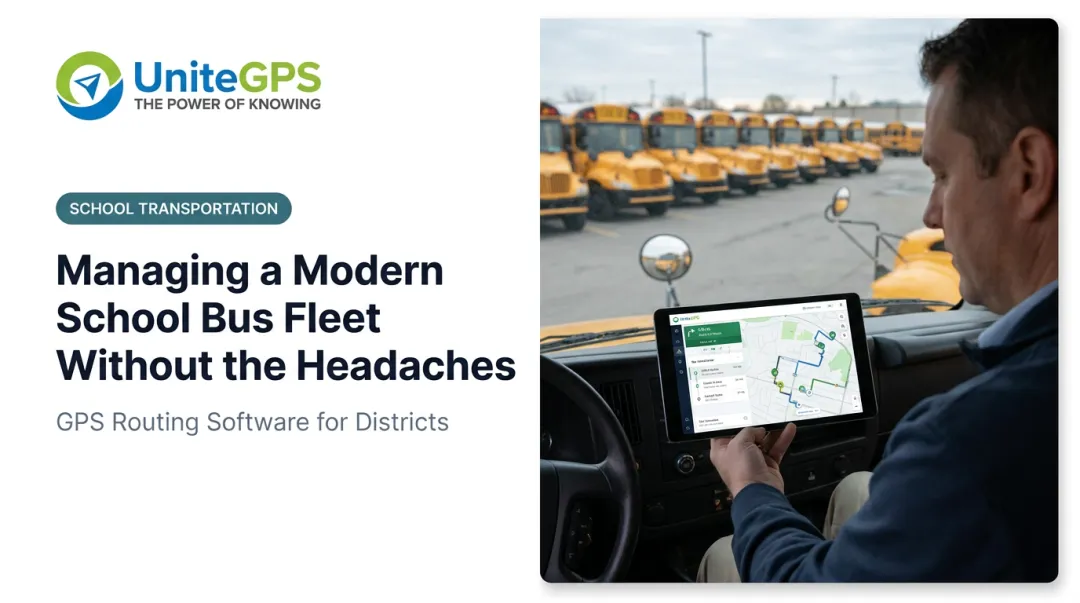
The operational shift happens when all streams feed a single unified dashboard. Dispatchers see location, ridership, schedule adherence, and parent alerts without toggling between systems. When that unified view is in place, transportation directors spend less time chasing information and more time managing actual operations.
How Real-Time Data Changes Day-to-Day Scheduling Decisions
Live data expands what's operationally possible while routes are still running — not just what dispatchers can see, but what they can actually do about it.
Responding to Delays Before Parents Call
With live GPS tracking, dispatchers can see which routes are running behind before the phone starts ringing. That window — between when a delay develops and when parents notice — is where proactive operations happen.
Supervisors can send automated alerts to affected families, reassign coverage, or adjust downstream stops while the route is still in progress. One district using UniteGPS's Communication Center reported fielding zero calls during a 20-minute delay because the system handled parent notifications automatically. That's the operational difference between a reactive phone queue and a team focused on managing the situation.
Adapting to Traffic and Road Disruptions
Construction closures, accidents, and weather events create navigation decisions that drivers currently make individually, without coordination. The result: inconsistent ETAs across the school bus fleet, missed stops, and no record of what actually happened.
Real-time traffic and road condition data lets dispatchers identify problems and push rerouting guidance before individual drivers make those calls on their own. That coordination alone reduces inconsistent ETAs and eliminates the "what actually happened" guesswork after the fact.
Sub drivers and less-experienced drivers face the steepest challenge here. Without the institutional knowledge regular drivers carry, an unexpected detour can mean missed stops. In-vehicle tablet navigation updated mid-run closes that gap.
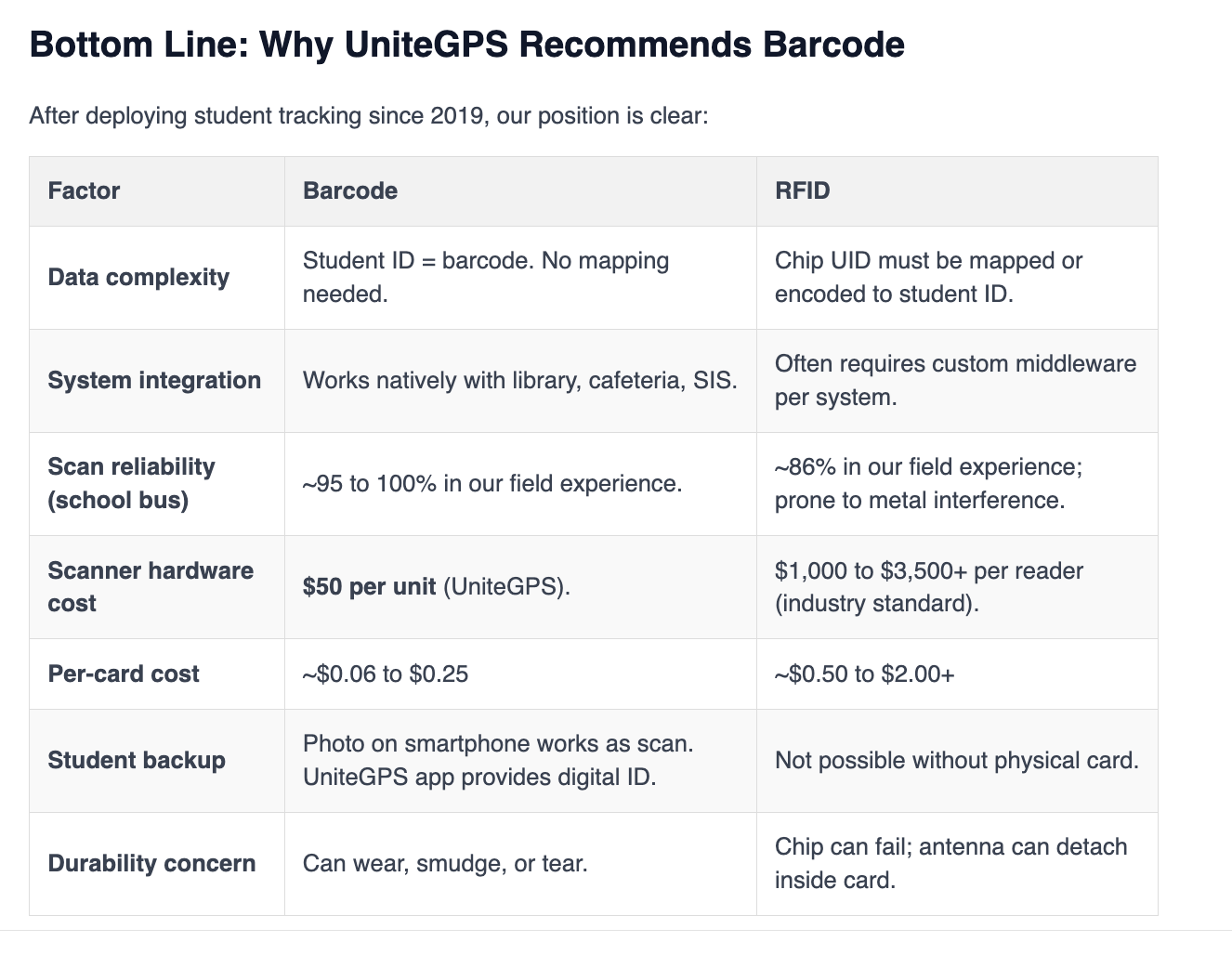
UniteGPS's on-board driver tablet is built for exactly this scenario. Drivers get:
- Bus-route-appropriate navigation with audible turn-by-turn directions
- Student information displayed at each stop
- Automatic stop-time recalculation when routes change mid-run
The tablet runs on a cellular data connection, so any route adjustments dispatched from the office reach the driver immediately.
Supporting Bell Time and Emergency Schedule Changes
Bell time changes don't affect one route — they trigger a reconfiguration across the entire school bus fleet. Districts managing that process manually, through spreadsheets, absorb hours of recalculation work. Districts with real-time data infrastructure can model changes against live constraints and implement them in minutes.
California's SB 328 later-start-time mandate offers a concrete example of the ripple effect: a CSBA study found that 40% of board presidents cited working families struggling with child supervision as a primary impact, alongside significant challenges coordinating bus routes across school levels. Districts without dynamic scheduling tools absorb that complexity manually, every time a bell time shifts.
Real-Time Ridership Data: The Scheduling Input Districts Often Miss
Most GPS deployments focus on vehicle tracking. Fewer districts capture what's happening inside the vehicle — specifically, which students actually board at which stops on which days.
That gap matters. Ridership patterns rarely match the fixed rosters routes were built on.
What Ridership Data Reveals
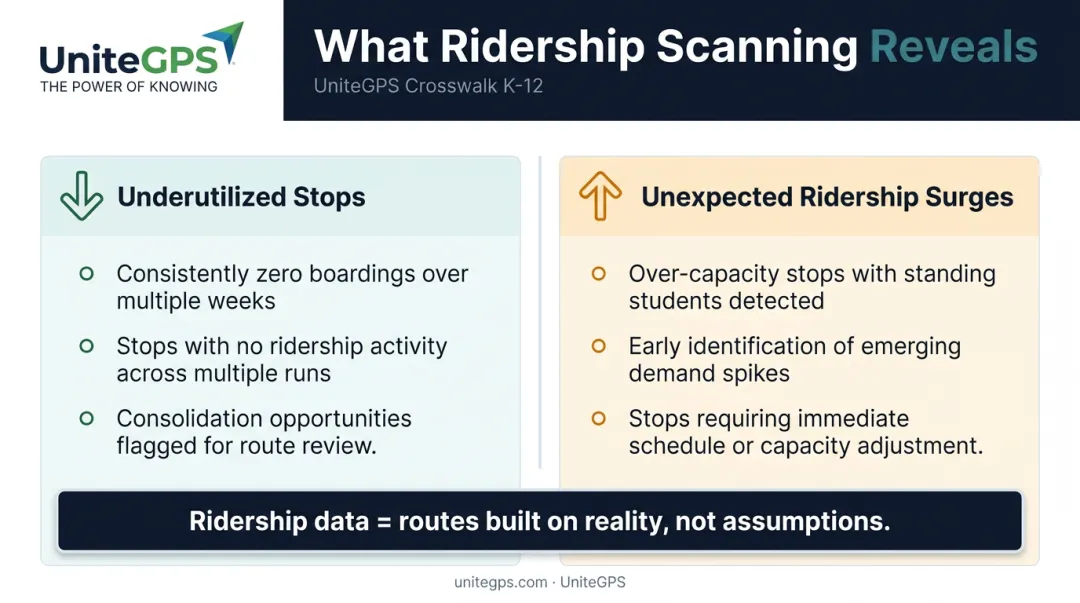
Live ridership scanning — students scanning a barcode card when boarding and exiting — gives transportation teams two categories of actionable intelligence:
- Underutilized stops: Consistently low or zero boardings signal consolidation opportunities that would never appear in planned rosters
- Unexpected ridership surges: Stops absorbing more students than planned can be identified before they create capacity problems
North Carolina's TDTIMS routing system offers a useful framework here: it audits computerized routes against real-world data — actual daily buses, student riders, bus miles, and driver hours — requiring results to meet at least 90% of officially reported numbers to generate an accurate efficiency rating. That comparison only works with verified ridership data, not enrollment-based assumptions.
The Safety Dimension
Real-time ridership data also creates a live record of accountability. When a student is expected to board but doesn't scan, that absence is captured. Parents whose child boarded receive a confirmation notification; parents whose child didn't receive nothing — a passive alert that something may be wrong.
New Jersey law requires bus drivers to inspect their vehicle for students at the end of every route. NHTSA reported 206 school-age child fatalities in school-transportation-related crashes from 2012 to 2021. Ridership data supports the accountability infrastructure that complements these safety requirements.
How UniteGPS Crosswalk Approaches This
UniteGPS built ridership tracking into Crosswalk in 2019 after districts made clear that tracking the bus wasn't enough — they needed to know who was on it.
Every bus runs a tablet that logs who boarded, when, and at which stop — generating an exact daily roster — a stop manifest — with true per-bus counts. That data flows simultaneously to:
- Parent notification alerts
- IEP/Medicaid billing documentation
- The dispatcher's unified real-time view
Tim Lyons, Director of Transportation at Benton Community School District, described the operational shift: "If a parent calls saying that the bus didn't stop, we can look and see that they were there. It has made a huge difference in our district."
What Happens When Parents Have Real-Time Visibility
Every time a bus runs late and parents don't know why, the transportation office absorbs the impact. Phone volume spikes. Staff who should be managing the situation are instead explaining it repeatedly to individual callers.
This is a predictable, solvable operational burden.
The Call Volume Problem
When parents have no visibility into bus status, calling the office is their only option. A parent-facing app showing live bus location and arrival ETAs changes that. Parents can see the bus approaching their child's stop, know it's running late, and make informed decisions without picking up the phone.
The mechanism is straightforward: when parents can answer their own question, they don't ask it. Districts that deploy proactive automated notifications during delays report dramatic reductions in reactive inbound calls. One UniteGPS district confirmed zero inbound calls during a 20-minute delay after deploying automated parent alerts — a result that's consistent with what transportation offices see across the board.
How Visibility Reduces Parent Anxiety
Parents who can see where the bus is experience less anxiety. They're less likely to keep children home as a precaution on days when the bus is simply running a few minutes late. Over time, that reliability perception affects overall confidence in the transportation program.
UniteGPS's parent app originated from exactly this problem. Co-founder Christopher Bunnell watched his own children stand in freezing Maine winters waiting for a bus with no ETA, at a time when smartphones could already track nearly anything. That gap became the company's founding insight in 2014: families deserved real-time visibility into something as basic as when the school bus would arrive.
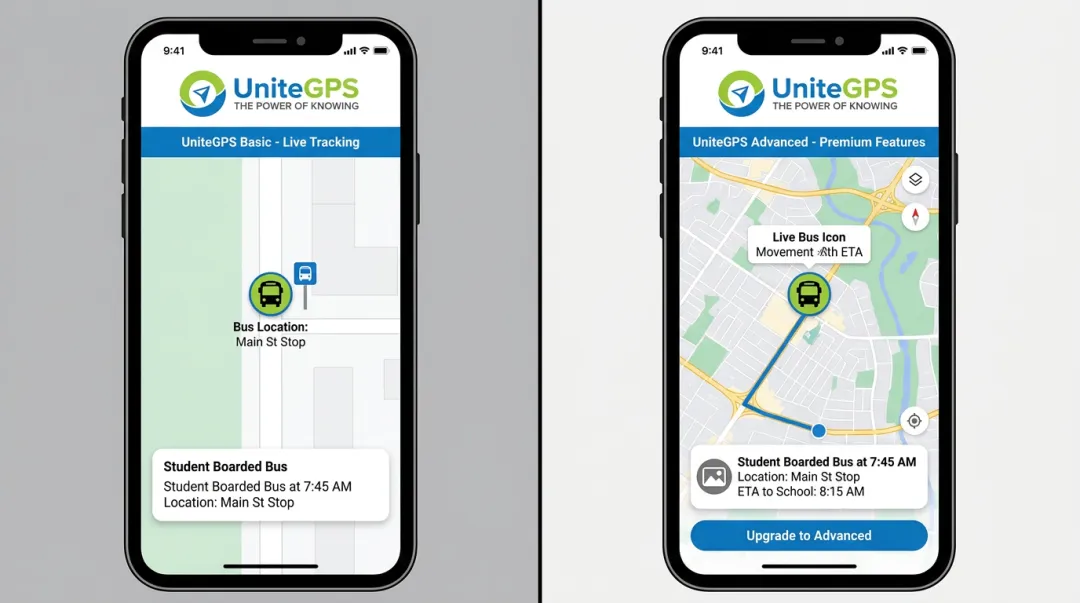
The Crosswalk parent app now offers two levels of parent visibility:
- Live location: Shows the bus's live location and expected stop arrival times
- Ridership alerts: Adds instant notifications the moment a student scans on or off the bus, confirming their child boarded or arrived without a single phone call
Turning Today's Real-Time Data Into Better Routes Tomorrow
The value of real-time data compounds. Every day of operation generates evidence — delay patterns, ridership trends, timing gaps, traffic bottlenecks — that would take years to collect through complaint-based feedback alone.
Operational Data as a Planning Asset
Patterns in daily delay data reveal where routes consistently run behind schedule. Stop-level ridership trends show which stops are underperforming and which are absorbing unexpected demand. Recurring traffic bottlenecks point to timing windows that should be adjusted before the next school year.
The Crosswalk platform stores this operational history and makes it retrievable. Transportation directors can:
- Pull a step-by-step breakdown of any vehicle's history across any date range
- Compare actual traveled routes against planned routes on interactive maps
- Access ridership heat maps highlighting high-demand stops and times
Performance analytics packages on-time performance, load factors, mileage, and consolidation impact into board-ready, defensible reporting.
Defending Decisions to Administrators and School Boards
Route consolidation and timing changes are often controversial. "We're eliminating that stop" lands differently when backed by six months of ridership data showing zero boardings than when it comes from a coordinator's recollection.
Districts that collect real-time data today are building a historical dataset that makes next year's route planning faster, more accurate, and more credible. UniteGPS's Route Optimization analysis produces documented before/after savings — typically $300,000–$500,000 for a mid-size district, with single route eliminations saving approximately $40,000–$50,000 annually — formatted specifically for board presentation.
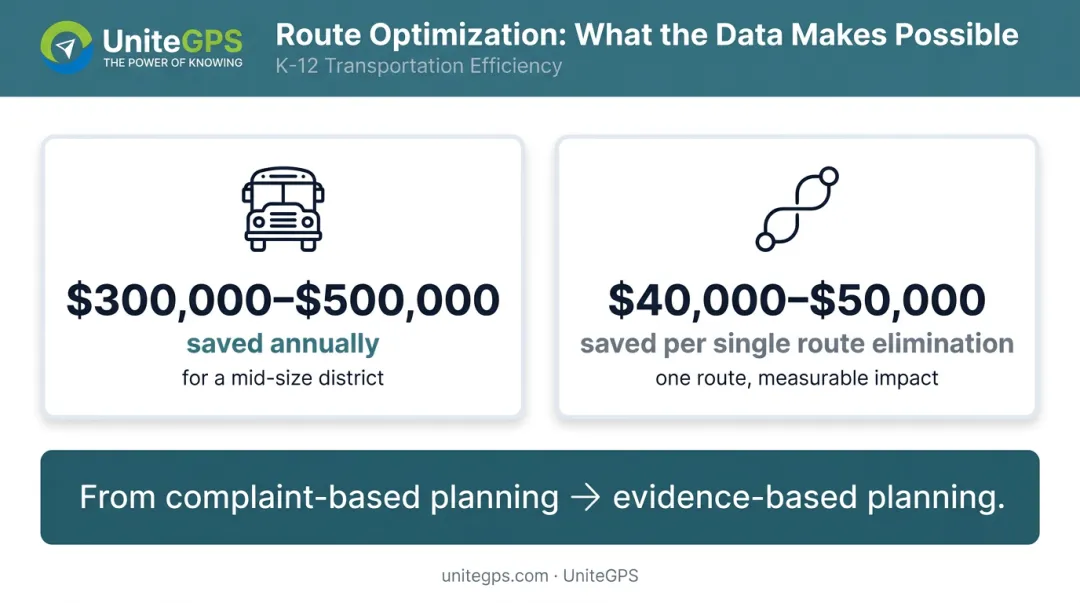
The shift from complaint-based planning to evidence-based planning is one of the less-discussed benefits of real-time data infrastructure. When the data exists, the conversation changes — from defending a judgment call to presenting a documented case. That's what the right partner is really for: not just better software, but a transportation team that operates — and leads — like the professionals they are. UniteGPS doesn't sell you software and walk away — we stay, we teach, and we help you build a transportation operation your district can be proud of. Great student transportation starts with great leaders — and we build both.
Frequently Asked Questions
How does real-time GPS data improve school bus route efficiency?
Real-time GPS allows dispatchers to identify delays as they develop, reroute buses around hazards, and verify that stops are completed on schedule. Over time, the accumulated data — delay patterns, actual vs. planned route adherence, stop-level timing — becomes the evidence base for route optimization decisions during annual planning cycles.
Can real-time data help reduce parent calls to the transportation office?
Yes. When parents have access to live bus location and arrival ETAs through a mobile app, they can answer their own question about where the bus is — without calling the office. Automated delay notifications during disruptions further reduce reactive inbound volume, freeing transportation staff to focus on managing operations rather than explaining them.
What is the difference between static and dynamic school bus scheduling?
Static scheduling builds fixed routes planned in advance and updated infrequently — typically only when problems become unavoidable. Dynamic scheduling uses real-time data to monitor routes as they run, adjust to disruptions as they happen, and feed operational patterns back into the next planning cycle, so the schedule improves continuously rather than stagnating between manual reviews.
Does the parent notification know the route, or will it alert when the bus just passes nearby?
A route-aware system follows the bus's planned path, not just its raw location. So a parent isn't alerted simply because the bus drives past a nearby road before it actually reaches their child's stop. Arrival predictions are calculated against the route the bus is running, which is what makes real-time ETAs accurate enough to rely on.
How do I get notified when there are enrollment changes I need to act on?
Each morning, the action center flags exactly what changed overnight in your SIS — new students, address changes, and disenrollments — so you're not manually comparing rosters to catch updates. Transportation staff see what changed and can respond before a change turns into a missed pickup.
How long does implementation take, and what does it require from us?
Not much from you — that's the point. A named implementation contact builds your initial routes with your team, the SIS data feed is configured in the same window, and GPS devices ship pre-labeled and pre-assigned, so installation is plug and play. Most districts have real-time GPS and routing live within weeks, and the 90-day free trial covers the entire setup, so you're never doing the heavy lifting alone.
Can we do year-to-year? Our board restricts long-term contracts.
Yes. UniteGPS contracts are year-to-year with annual invoicing — no multi-year commitment — and the terms go in writing on the quote. That matters for districts whose board or legal counsel limits agreements to a set term.