For school transportation departments, the pressure is coming from all sides. A persistent driver shortage means doing more with less staff. Rising fuel and maintenance costs are squeezing already tight budgets. And in an on-demand world, parents expect real-time information about their child’s bus. It’s a perfect storm of operational challenges.
This isn’t a forecast of future problems; it's the daily reality for districts across the country. The good news is that artificial intelligence (AI) is no longer a futuristic concept—it's a practical tool being deployed today to solve these exact issues. From optimizing complex routes to preventing accidents before they happen, AI is actively reshaping school bus operations.
This article breaks down the four major ways AI is making a difference: smarter route planning, enhanced student safety, real-time visibility for families, and more reliable school bus fleet maintenance. We’ll look at real-world examples and practical steps, treating AI not as a replacement for experienced staff, but as a powerful decision-support tool that helps your team work smarter.
Key Takeaways
- AI-powered route optimization reduces route counts and fuel costs, helping districts manage driver shortages.
- Safety tools like AI dash cams and stop-arm cameras are actively reducing preventable incidents around school buses.
- Real-time GPS and ridership tracking give parents accurate ETAs and provide administrators with full accountability.
- Adopting AI requires a thoughtful plan for data privacy, staff training, and strict FERPA compliance.
- Districts can start small, with routing and GPS being the most common and highest-ROI entry points.
AI-Powered Route Optimization: Smarter Routes, Fewer Miles
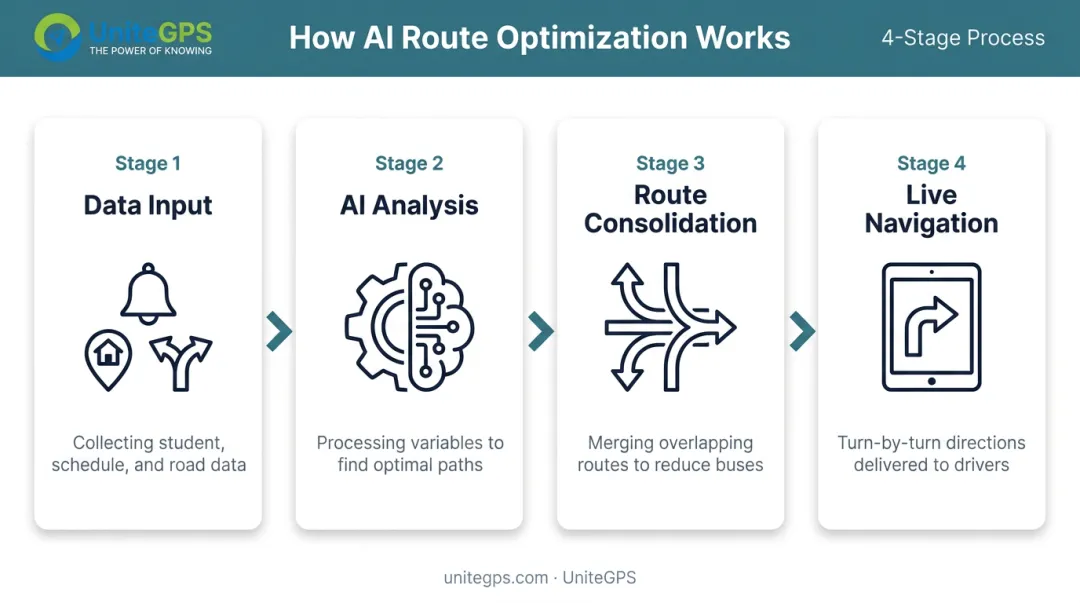
AI-based routing software analyzes thousands of variables simultaneously — student addresses, bell schedules, road data, vehicle capacity, and stop constraints — to calculate optimal routes in minutes, not weeks. No human router can match that scale.
The result is a system that surfaces efficiency opportunities that are nearly impossible to spot manually across a large school bus fleet.
Combining Routes to Maximize Capacity
One of the most immediate benefits is "route combining." The AI analyzes ridership data and route paths to find redundant or underutilized routes that can be merged. This directly reduces the total number of buses and drivers needed to service the same student population.
For instance, after implementing AI optimization, Colorado Springs School District 11 increased its share of highly utilized bus routes by 46% and successfully eliminated its driver shortage. By ensuring every bus runs closer to full capacity, the district could cover all its transportation needs with its existing staff.
Supporting Drivers with Turn-by-Turn Navigation
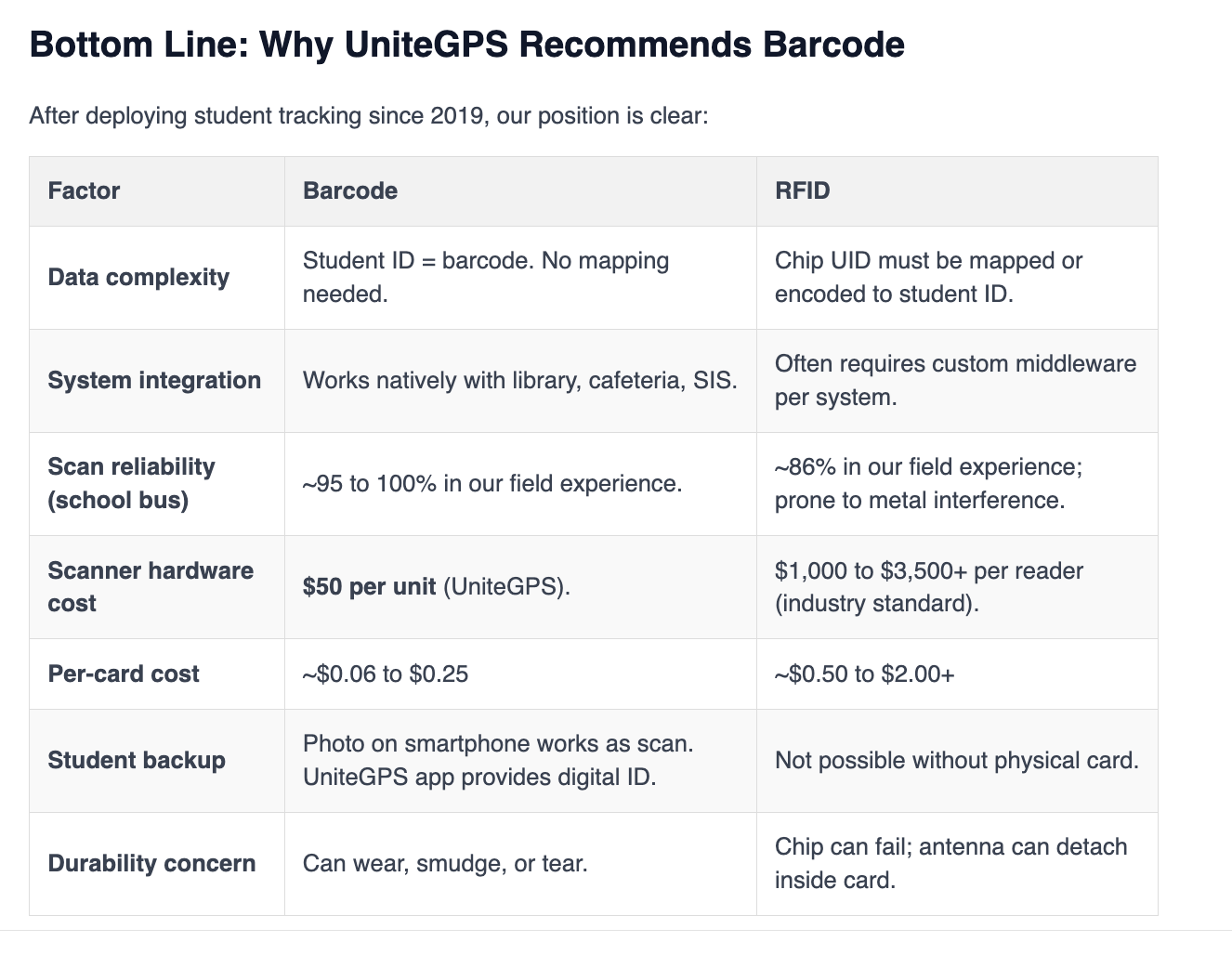
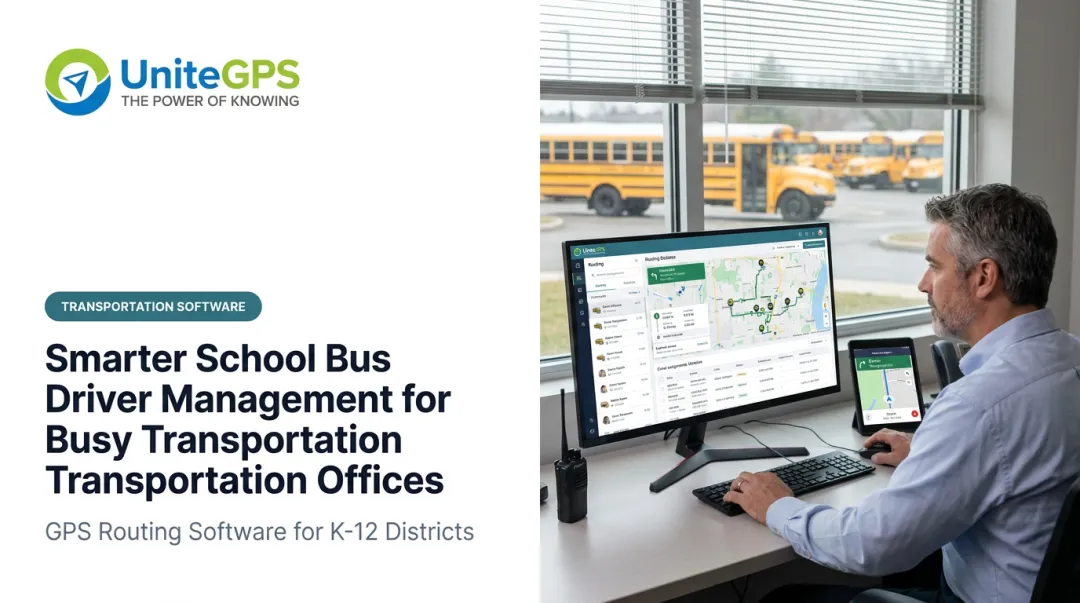
Route efficiency also extends to daily operations. When a driver faces a road closure or an unexpected detour, the right platform can provide instant support. In districts like Prosper ISD in Texas, drivers use AI-enabled tablets that deliver turn-by-turn instructions, helping them confidently navigate unfamiliar roads without calling dispatch. This is especially critical for sub drivers who don't have years of route memory to rely on.
By making it easier for new or sub drivers to cover any route, districts lower operational risk and expand the flexibility of their driving team. UniteGPS Crosswalk combines these planning tools with live operational visibility, so directors manage both route optimization and school bus fleet tracking from a single system.
How AI Enhances Student Safety on the Bus
While efficiency is a major driver of AI adoption, the most significant transformations are happening in student safety. AI-powered systems provide a proactive layer of protection that addresses the most common causes of school bus-related incidents.
AI-Equipped Dash Cameras
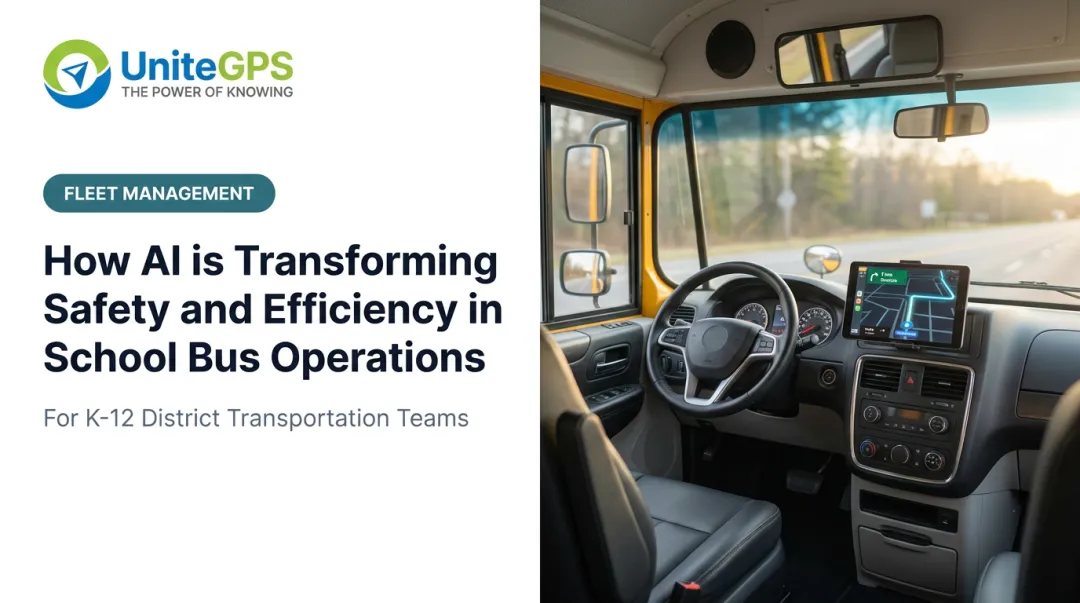
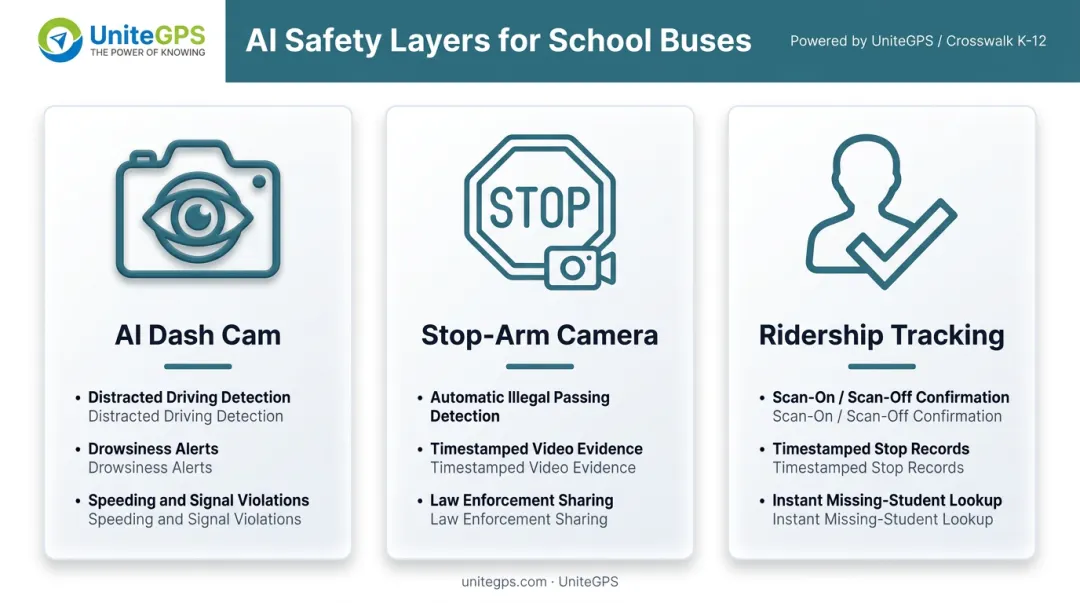
Modern dash cameras do more than just record. They use computer vision to actively monitor the road and driver behavior in real time. These systems can detect:
- Distracted driving, such as cell phone use.
- Signs of drowsiness, like head slumping.
- Unsafe actions, like speeding or failing to obey traffic signals.
When the AI detects a risk, it can issue an instant in-cab alert, giving the driver a chance to correct their behavior before an incident occurs. Over time, this data helps transportation directors identify which drivers may need additional coaching, allowing for proactive intervention.
Stop-Arm Violation Detection
Illegally passing a stopped school bus is one of the greatest dangers students face. The scale of the problem is staggering; a one-day count by the National Association of State Directors of Pupil Transportation Services (NASDPTS) extrapolated to more than 39 million illegal passings during the 2024-2025 school year.
AI-powered cameras mounted on the bus's stop arm automatically identify, record, and timestamp vehicles that pass illegally. This high-resolution video evidence can be shared directly with law enforcement, creating a powerful deterrent and holding violators accountable.
Student Ridership Tracking
External threats like stop-arm violations are only part of the safety picture. Accountability on the bus itself matters just as much — and that starts with knowing exactly who boarded and where they got off.
The most common nightmare for any transportation director is a student left on a bus or dropped at the wrong stop. Using tablets and barcode scanning, systems like UniteGPS Crosswalk confirm which students boarded and exited at each stop.
This creates a timestamped record of every student's journey. If a child is reported missing, a director can immediately pull up their record and see exactly where and when they got off the bus — with a precise location, stop time, and driver on record.
Real-Time Visibility: Keeping Parents and Administrators in the Loop
Gone are the days of parents calling the transportation office to ask, "Where's the bus?" AI-powered GPS and parent notification apps provide direct, real-time answers, reducing administrative workload and improving family communication.
Parent apps translate live GPS data from the bus into accurate arrival time predictions. Families see a live ETA on their phone instead of relying on a fixed schedule that doesn't account for traffic or delays. Fewer guessing games means fewer inbound calls to the transportation office — freeing up staff to focus on operations rather than answering the same question all day.
The UniteGPS Crosswalk platform pairs its parent app with on-bus ridership tracking tablets. Parents not only see the bus approaching but can also receive an alert the moment their child scans on or off the bus. This provides peace of mind that their child is safely on their way.
For administrators, this visibility extends across the entire school bus fleet. A transportation director can:
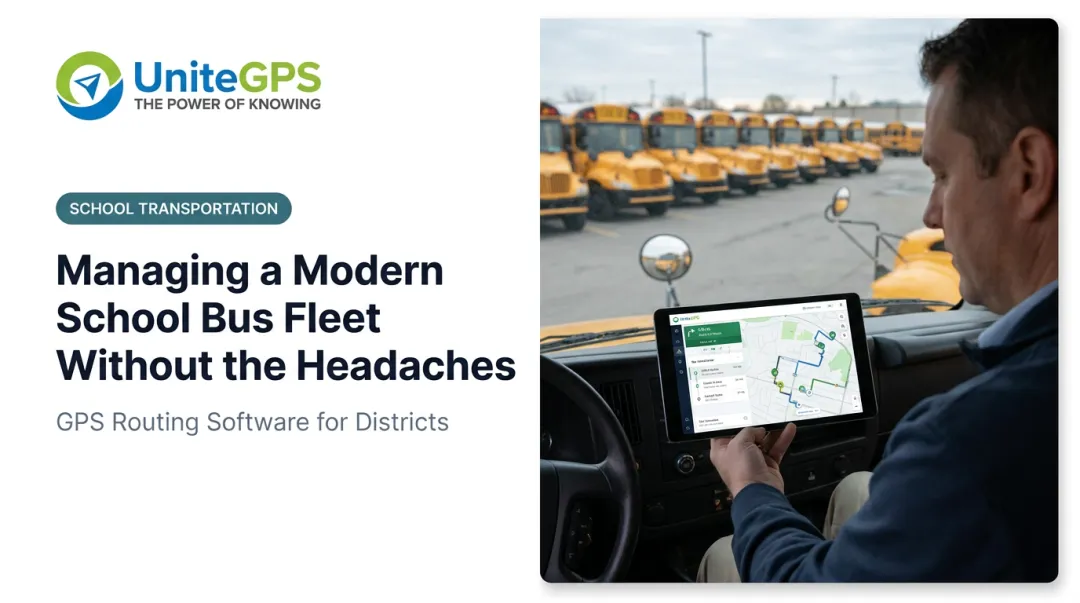
- Monitor all active buses on a single live map.
- Receive automatic alerts for speeding, excessive idling, or route deviations.
- Pull on-demand reports on route performance, on-time percentages, and ridership counts.
When a bus idles too long or drifts off route, the director knows before a parent calls. That kind of early visibility is what separates districts that manage problems from those that prevent them.
AI and the School Bus Driver Shortage
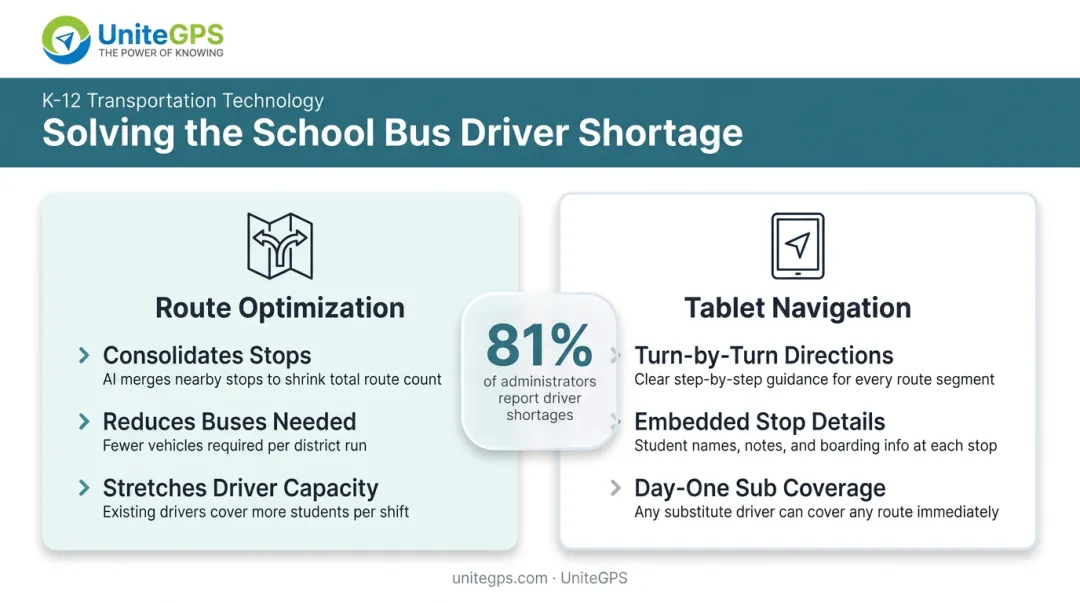
The school bus driver shortage remains a critical challenge for districts nationwide. A 2025 survey from AP-NORC found that 81% of school administrators report driver shortages are a problem for their district. AI isn't about replacing the skilled drivers districts already have; it's about making them more effective and lowering the barrier to entry for new ones.
Two areas where AI delivers the most immediate impact:
- Route optimization consolidates stops and improves efficiency, so districts can often service their entire student population with fewer buses — stretching existing driver capacity further.
- Tablet-based navigation gives new and sub drivers clear, turn-by-turn directions with student stop details embedded, so they can confidently cover an unfamiliar route from day one.
Both approaches reduce the stress on new drivers and help districts maintain consistent service — even when they're running short-staffed.
Predictive Maintenance and Fleet Reliability
An unexpected breakdown can throw an entire morning's schedule into chaos. AI-based telematics systems help prevent these disruptions before they happen. By monitoring engine data, mileage patterns, and diagnostic fault codes, these systems can predict when a component is likely to fail.
This allows maintenance teams to schedule repairs proactively instead of reacting to emergencies on the side of the road. Districts that adopt this approach typically see across-the-board improvements in school bus fleet availability and cost control:
- Fewer last-minute route cancellations
- More consistent and reliable service for families
- Lower total maintenance costs over the vehicle's lifespan
- More buses available and ready to roll each morning
What to Consider Before Adopting AI in School Transportation
Before signing any contracts or piloting new tools, districts should think carefully about three factors that determine whether an AI adoption succeeds or stalls.
Data Privacy and FERPA Compliance
AI systems often handle sensitive student data, including location records, ridership history, and video footage. Any platform used by a school must be fully compliant with the Family Educational Rights and Privacy Act (FERPA). Before signing any contract, districts should ask vendors directly about:
- Where and how student data is stored and encrypted.
- Who has access to the data and what controls are in place.
- What their data retention and deletion policies are.
A reputable vendor should be able to provide a clear Data Processing Agreement and demonstrate a commitment to protecting student privacy.
Cost and Phased Implementation
The idea of "adopting AI" can sound expensive, but districts don't need to do everything at once. Many start with the solutions that pay off fastest — routing software and basic GPS tracking — before expanding to cameras or ridership systems. Some technologies, like violator-funded stop-arm camera programs, can be implemented with little to no upfront cost to the district.
Staff Training and Change Management
Even the best software fails if staff aren't confident using it. A successful implementation includes a clear training plan for drivers, routers, and dispatchers — not just a user manual handed over after go-live.
Look for a partner that treats onboarding as professional development, not just software training. UniteGPS, for example, assigns a dedicated implementation contact who builds initial routes with your team and provides live support until staff are fully comfortable with the system. The technology matters, but so do the people running it. UniteGPS doesn't sell you software and walk away — we stay, we share what we know, and we help you build a transportation operation your district can be proud of. Great student transportation starts with great leaders, and we build both.
Frequently Asked Questions
Can AI help with the school bus driver shortage?
AI doesn't replace drivers, but it makes them more effective. Route consolidation means fewer drivers are needed, and turn-by-turn navigation makes it much easier for sub drivers to cover unfamiliar routes, helping districts maximize the staff they have.
Is student data safe when using AI transportation tools?
FERPA compliance is non-negotiable. Districts should verify how vendors store location and ridership data, who has access to it, and whether it is ever shared or sold. Ask vendors directly for their data processing agreements before signing.
What mapping does the routing use — is it just Google Maps?
Purpose-built routing platforms use school-bus-appropriate mapping and real-time GPS, not a consumer navigation app dropped on top of a bus route. That means routes respect road restrictions, bell times, and safe stop placement — the constraints Google Maps has no awareness of.
Can route optimization save money if we're already at max capacity?
Often, yes — and even when it can't, the analysis has value. UniteGPS offers a free route optimization study that analyzes your routes at no cost and typically identifies $300,000–$500,000 in savings for a mid-size district, with a single eliminated route worth roughly $40,000–$50,000 a year. For districts that are genuinely at capacity, the study still gives you an independent, board-ready assessment — and options like a two-tier bell schedule can add capacity without adding drivers.
How long does implementation take, and what does it require from us?
Less than most districts expect, and very little heavy lifting on your end. Adoption is phased — routing and GPS typically go live first, within weeks — and a named implementation contact builds your initial routes alongside your team rather than handing you a manual. GPS devices ship pre-labeled and pre-assigned, so installation is plug and play, and the 90-day free trial covers the full setup so you can see it working before you commit.