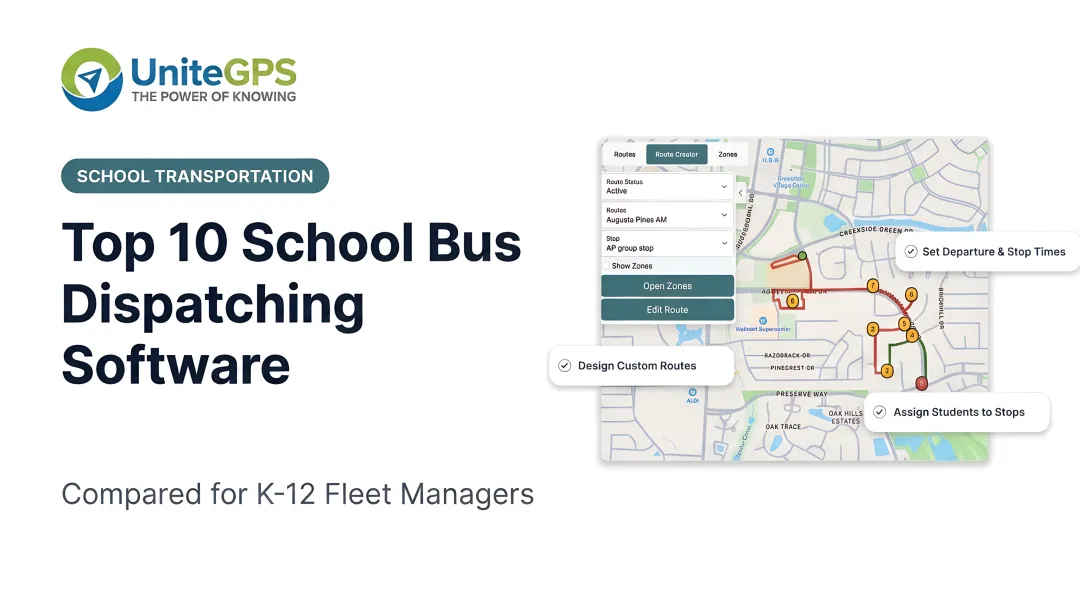
 Managing student transportation is never just about pre-planned routes. Every morning, the person running the operation juggles driver callouts, last-minute sub drivers, parent calls about missed buses, and the constant pressure of keeping 27 million students moving safely. According to the School Bus Fleet Fact Book 2024, the U.S. operates 480,000 school buses traveling 5.7 billion miles annually — a $28.6 billion system where operational inefficiencies compound fast.
Without purpose-built dispatching software, transportation departments burn hours on manual driver boards, spreadsheet-based schedules, and fielding calls that a parent app would eliminate entirely. Most directors inherit that reality — often the dependable driver who earned a promotion or the administrator reassigned to fix a department. The right platform, backed by a partner who has been there, changes that equation dramatically.
This guide covers 10 school bus dispatching platforms evaluated specifically for day-of operational capability, K-12 fit, and real-world usability — not just route planning features. The aim is not to sell you software and walk away; it is to help you pick the tool that makes you better at running your operation.
TL;DR
- School bus dispatching software handles real-time operations: driver assignments, real-time GPS, sub driver management, and parent notifications
- Key features to evaluate: SIS integration, sub driver support, student ridership tracking, FERPA compliance, and live customer support from people who know K-12
- Top platforms in 2025 range from affordable flat-rate tools built for small districts to large enterprise suites with custom pricing
- Pricing ranges from $49/month flat plans to custom enterprise quotes — factor in hardware, implementation, and ongoing support costs when comparing options
- Choosing the right platform comes down to district size, your current SIS, and whether you need a full transportation suite or a standalone dispatching tool
What Is School Bus Dispatching Software?
Route optimization builds efficient routes before the school year starts. Dispatching software runs the operation on the day it actually happens.
The distinction matters. A routing tool can plan the perfect route for October 15th. Dispatching software handles what happens when the driver assigned to that route calls in sick at 6 AM — who covers, what navigation they get, and whether parents find out before they're standing at the curb in the dark.
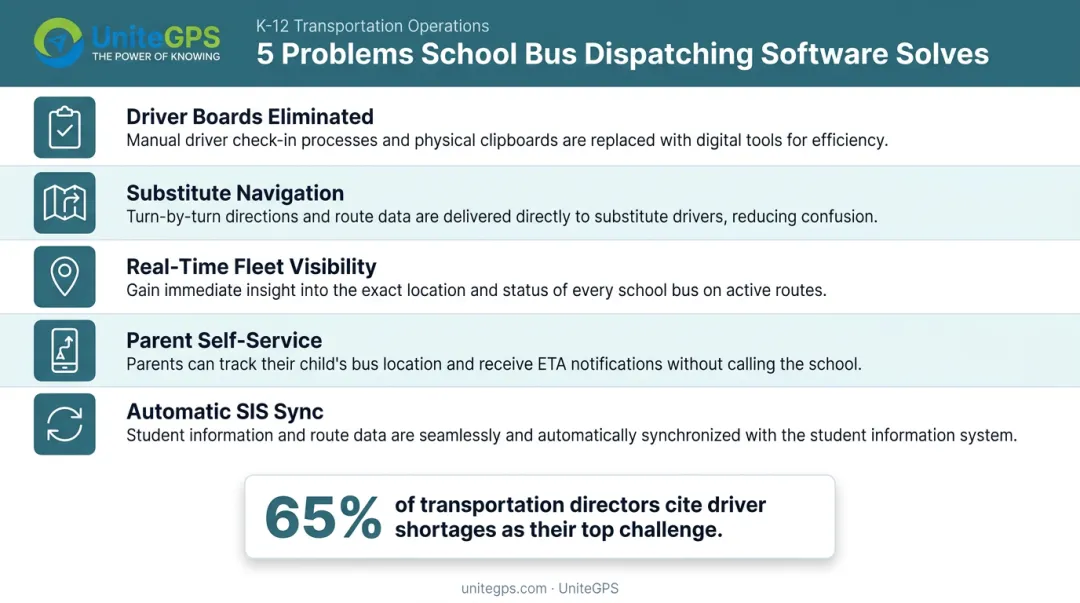
Core problems dispatching software solves:
- Eliminates manual driver assignment boards and whiteboard chaos on callout days
- Gives sub drivers a clear stop manifest and turn-by-turn navigation without a briefing from dispatch
- Provides administrators real-time GPS visibility across the entire school bus fleet simultaneously
- Reduces parent call volume by letting families self-serve bus location and ETA
- Keeps student data synced with enrollment systems automatically
A 2021 NAPT-NASDPTS-NSTA survey found that 65% of transportation respondents identified driver shortages as their top operational challenge — which makes sub driver support one of the most critical dispatching features to evaluate.
That reality shaped how the 10 platforms below were evaluated — with particular weight given to sub driver support, SIS integration depth, parent notification tools, and verified use in K-12 districts.
Top 10 School Bus Dispatching Software: Features & Reviews
These platforms were evaluated for dispatching capability — not just routing — along with K-12 relevance, integration with student information systems, and real-world usability. These platforms were evaluated for dispatching capability, not just routing, along with K-12 relevance, integration with student information systems, and real-world usability. Each entry focuses on what distinguishes it operationally, so you can match the platform to your district's actual priorities.
1. UniteGPS Crosswalk
Founded in 2014 and serving 100+ school districts nationwide, UniteGPS Crosswalk is a fully integrated K-12 transportation platform built from a decade of direct conversations with transportation directors. It is built by people who have sat where you sit, and it is designed to make you better at the job — not just to run your buses.
What makes Crosswalk stand out for dispatching specifically is how it handles the two hardest parts of the job: sub driver days and parent call volume. When a regular driver calls out, a sub driver gets on the bus and finds a complete stop manifest, turn-by-turn navigation, stop-by-stop student information, and audible directions. No briefing required. That's a deliberate design decision, not an incidental feature.
The platform syncs automatically with major K-12 SIS platforms, eliminating manual re-entry when student enrollment changes. Administrators get a unified fleet view with real-time GPS positions updated every few seconds, color-coded by on-time status. Parents can self-serve bus location and ETA through the parent app or SMS, which directly reduces inbound calls to the transportation office.
Tim Lyons, Director of Transportation at Benton Community School District, put it plainly: "If a parent calls saying that the bus didn't stop, we can look and see that they were there. It has made a huge difference in our district."
The platform is FERPA compliant, bootstrapped without private equity pressure, and offers a 90-day free trial with unlimited live support and no credit card required — because a partner who stays and teaches is worth more than a vendor who sells and disappears.
| Category | Details |
|---|---|
| Best For | K-12 districts of all sizes seeking an integrated dispatching, routing, GPS, and ridership platform with strong support and no long-term lock-in |
| Key Features | Real-time GPS, SIS integration, student ridership with bus tablets, sub driver navigation, parent app, Medicaid billing support, Communication Center |
| Pricing | Core Plan: $49/month flat; Plus Plan: $25/bus/month; Full Suite: $39/bus/month + hardware; 90-day free trial, no credit card required |
2. Transfinder
Transfinder has served student transportation since 1988 and operates in more than 2,000 school districts and municipalities across 47 states. Its RouteFinder Plus platform handles routing, scheduling, and dispatching through a browser-based interface with no software installation needed.
Its core strength is mature, AI-powered route optimization paired with schedule exception management. Dispatchers handle day-of changes, reschedule routes, and communicate with drivers without switching systems. Calendar-based routing and PowerSchool integration make it practical for districts managing complex bell time overlaps.
| Category | Details |
|---|---|
| Best For | Mid-to-large districts wanting a mature, full-featured routing and dispatching platform with a long track record |
| Key Features | AI route optimization, schedule exceptions management, SIS integration (PowerSchool), auto data import, parent portal, driver dispatch, Esri mapping |
| Pricing | Contact for custom quote based on district size |
3. Tyler Technologies (Traversa)
Tyler Technologies' Traversa pairs a cloud-based routing and dispatching platform with the Tyler Drive on-board tablet, creating a single database for routing, GPS tracking, fleet maintenance, and student ridership. The tablet covers turn-by-turn navigation, student ridership management, employee timekeeping, and pre/post-trip vehicle inspections in one device.
Trusted by more than 1,100 school districts, Traversa integrates natively with Tyler's broader ERP ecosystem. For districts already running Tyler's School ERP Pro or Time & Attendance modules, data flows across systems without middleware.
| Category | Details |
|---|---|
| Best For | Districts embedded in the Tyler Technologies ecosystem seeking a unified transportation and administrative software environment |
| Key Features | Route and stop management, Tyler Drive on-board tablet, GPS tracking, fleet maintenance tracking, parts and labor management, ERP integration |
| Pricing | Contact for pricing |
4. Edulog
Edulog has provided routing and planning software since 1977 and now supports over 85,000 buses daily across North America. Its Athena platform is cloud-native, combining route optimization, GPS tracking, parent and driver portals, and analytics in one environment.
The platform is designed with distinct interfaces for dispatchers, administrators, drivers, and parents, which reduces the training burden that comes with complex multi-role systems. Districts dealing with rapid enrollment growth or multi-tier routing needs benefit from the scalability Edulog's infrastructure supports.
| Category | Details |
|---|---|
| Best For | Districts of any size seeking a scalable cloud platform with distinct user experiences for each role and built-in telematics |
| Key Features | Cloud-native routing, GPS fleet tracking, student ridership, driver management, parent communication app, real-time bus monitoring, analytics |
| Pricing | Contact for pricing |
5. Samsara
Samsara built its platform for commercial fleets first, then expanded into school transportation with a dedicated K-12 offering. It leads on hardware-integrated safety: AI multicameras with 360-degree visibility, NFC student ID card readers for ridership tracking, 4G LTE vehicle gateways, and integrations with routing platforms including Edulog and Transfinder.
If driver behavior monitoring and video telematics are primary concerns rather than SIS integration depth, Samsara is worth evaluating. It's best suited for districts or contractors where video evidence and safety analytics drive the platform decision.
| Category | Details |
|---|---|
| Best For | Districts or contractors prioritizing driver safety monitoring, video telematics, and real-time vehicle data alongside dispatching |
| Key Features | Real-time GPS, AI multicams, NFC student ridership, driver behavior monitoring, routing tool integrations (Edulog, Transfinder), live video access |
| Pricing | Contact for pricing |
6. TripSpark K-12 (VEO)
TripSpark's VEO platform handles both regular education and special needs routing with a calendar-based scheduling system built for multi-tier bell times. Its thin-client architecture keeps hardware requirements low, and the proactive routing tools help transportation teams anticipate scheduling conflicts before they become day-of problems.
Districts managing IEP transportation alongside general education routing, with complex eligibility rules and separate billing requirements, will find VEO's structure well-matched to that operational complexity.
| Category | Details |
|---|---|
| Best For | Districts managing both regular and special needs transportation with complex multi-tier bell times |
| Key Features | Multi-tier routing, special needs transport support, calendar-based scheduling, GPS tracking, parent communication |
| Pricing | Contact for pricing |
7. Zonar Systems
Zonar operates across commercial and K-12 fleets, offering GPS tracking, student ridership, route optimization, and its flagship Electronic Verified Inspection Reporting (EVIR) compliance tool. EVIR digitizes pre- and post-trip vehicle inspections, replacing paper logs with verified digital records.
For districts where vehicle compliance documentation is a priority alongside dispatching, Zonar's Bus Suite addresses both: dispatch and driver messaging, student ridership visibility, parent bus-location data, and driver coaching tools within a single platform.
| Category | Details |
|---|---|
| Best For | Districts and contractors needing strong vehicle compliance tools, inspection management, and routing in one platform |
| Key Features | GPS tracking, student ridership, EVIR compliance, route optimization, dispatch and driver messaging, offline navigation, fleet diagnostics |
| Pricing | Contact for pricing |
8. Safe Fleet
Safe Fleet integrates routing, GPS tracking, video surveillance, and a parent portal in a browser-accessible platform with no dedicated software installation needed. Its standout dispatching feature is access to live camera feeds during incidents, allowing dispatchers to pull real-time video from a specific vehicle while managing the operational response.
Districts where accountability documentation matters — audit trails, route history, scenario planning — will find Safe Fleet's connected bus approach useful for both operations and compliance.
| Category | Details |
|---|---|
| Best For | Districts seeking integrated video surveillance and dispatch management with strong audit documentation |
| Key Features | Web-based routing, GPS tracking, video surveillance, parent portal, live camera access during incidents, connected bus data integration |
| Pricing | Contact for pricing |
9. Bytecurve360
Bytecurve360 focuses on the dispatcher's daily workflow: driver scheduling, payroll, time-and-attendance, and GPS routing integration, all accessible via desktop and the DriveOn driver mobile app. Drivers check in and out remotely, view their schedules, and receive dispatch messages directly on their smartphones.
For school bus contractors managing large driver pools with complex pay structures, Bytecurve's payroll tools eliminate manual calculations for guarantees, overtime, and job-specific pay rates. The platform also integrates with BusPlanner for districts using that routing system.
| Category | Details |
|---|---|
| Best For | Districts and school bus contractors focused on driver scheduling, dispatch communication, and payroll management |
| Key Features | Driver scheduling, DriveOn mobile app, payroll and time-and-attendance management, GPS routing integration, driver check-in/check-out |
| Pricing | Contact for pricing |
10. BusPlanner
BusPlanner has served K-12 districts across North America for over 40 years with an AI-powered route optimization platform built around analytics and reporting. The platform includes data migration services, where BusPlanner staff convert and pre-load all routing data during implementation, significantly reducing the burden on transportation teams during onboarding.
For districts that prioritize optimization analytics and want a managed implementation experience rather than self-configuration, BusPlanner's approach is a genuine operational advantage.
| Category | Details |
|---|---|
| Best For | Districts wanting AI-powered route optimization with a managed onboarding process and strong analytics |
| Key Features | AI-based route optimization, analytics and reporting, student assignment management, data migration services |
| Pricing | Contact for pricing |
How We Chose the Best School Bus Dispatching Software
This list prioritized platforms that address real dispatching pain points — not just pre-season route planning. The evaluation framework weighted day-of operational capability heavily: how does each platform handle a driver callout at 5:45 AM? The answer to that question separated the genuine dispatch tools from the route-builders.
Common mistakes districts make when selecting dispatching software:
- Choosing on routing features alone: advanced optimization algorithms don't help when a driver calls out at dawn
- Overlooking FERPA compliance: any platform storing student names, addresses, or route assignments must comply — this isn't automatic
- Underestimating support quality: a platform that routes you to a ticketing queue during a 6 AM crisis is a liability — you want a partner who picks up, not a queue
- Ignoring SIS integration complexity — "we integrate with PowerSchool" can mean automated bidirectional sync or a monthly CSV upload; always ask specifically
Factors weighted in final ranking:
| Factor | Why It Matters |
|---|---|
| K-12 specificity | Commercial fleet tools require workarounds for school-specific workflows |
| Dispatching depth | Day-of operational tools vs. route planning only |
| SIS integration | Automated sync eliminates manual entry errors and saves hours weekly |
| Support model | Live specialist access vs. ticketing systems |
| Pricing transparency | Tiered plans vs. opaque custom quotes |
| Verified district use | Confirmed real-world implementations over marketing claims |
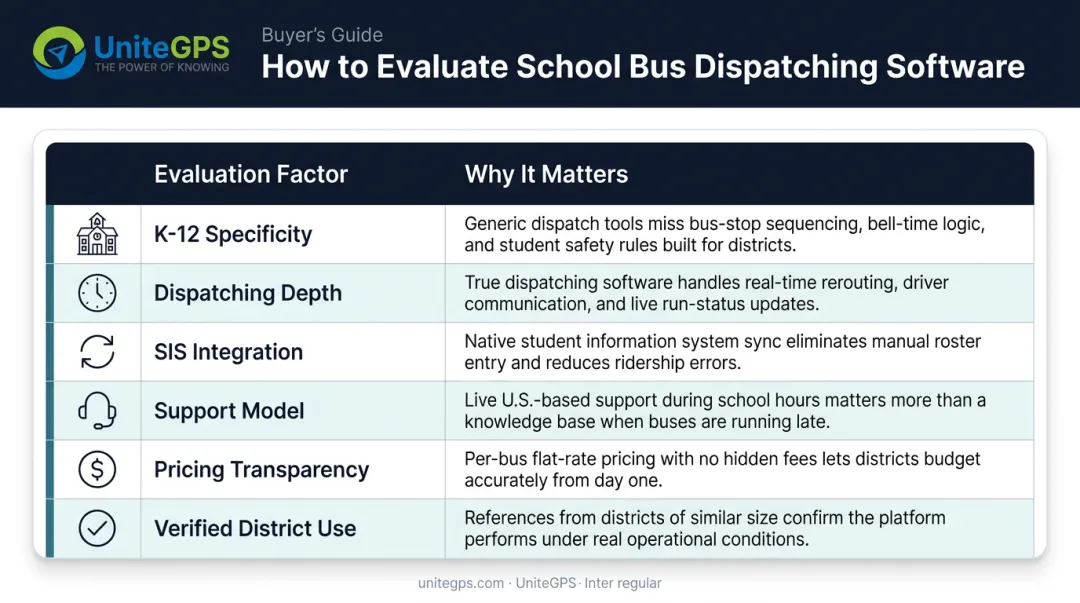
Delaware DOE's 2024 statewide routing RFP provides a useful public benchmark: their evaluation weighted vendor qualifications and experience at 30%, customer support capacity at 15%, and SIS integration (Infinite Campus specifically) at 10% — reflecting the same priorities that drive this list.
Conclusion
The right school bus dispatching software solves the day-of problems that actually cost transportation departments time: sub driver chaos, parent call volume, and real-time visibility gaps. Route optimization matters, but only if the platform handles what goes wrong on a Tuesday morning.
Before committing to a multi-year contract, evaluate platforms against your specific district size, current SIS, hardware infrastructure, and whether you need a full integrated suite or a focused dispatching add-on. A platform that's right for a 1,100-bus urban district may be overkill, or the wrong architecture entirely, for a 40-bus rural district.
One low-risk way to run that evaluation: UniteGPS Crosswalk offers a 90-day free trial with no credit card required. You get full platform access, unlimited live support from K-12 specialists who have been where you are, and complete data ownership throughout. Most companies sell you software and move on; the goal here is to stay, to teach, and to help you build a transportation operation you can be proud of.
Frequently Asked Questions
Is the free offer a first-year deal, or is it a forever thing?
It helps to separate the pieces. Route optimization comes free with the Core Plan, the data feed and route setup are free for the first 90 days so you can prove the fit before you pay, and live GPS and ridership are paid tiers priced per bus. None of it is a one-year teaser that jumps later. Pricing is year-to-year and stays where it lands, because nobody can work for free and you shouldn't have to guess what year two costs.
Does it integrate with our SIS: PowerSchool, Infinite Campus, or Skyward?
Yes. Crosswalk syncs directly with the major student information systems, pulling names, addresses, grade levels, and school assignments so nobody re-keys enrollment by hand. Ask any vendor whether the sync is truly bidirectional and automated or a monthly file upload, and confirm it still works if your PowerSchool doesn't include the transportation module, which trips up a lot of districts.
Will it work with the GPS hardware we already have?
In most cases, yes. If your buses already run CalAmp, Zonar, or 247Recorders devices, Crosswalk can take that data feed and run it in the platform, so you don't buy a whole second GPS system to switch. If you'd rather start fresh, devices arrive pre-labeled and pre-assigned, so you just plug in the bus it goes to and it's live.
Can we do year-to-year? Our board and lawyer restrict long-term contracts.
Year-to-year is the only way it works: annual invoicing, no five-year lock-in, and GPS devices included at no extra charge. For districts whose attorney or board caps agreements at three years, that gets confirmed in writing on the quote, and the invoice can be dated for the start of your fiscal year so budget timing is never the thing that stalls a decision.
How does dispatching software handle a sub driver who doesn't know the route?
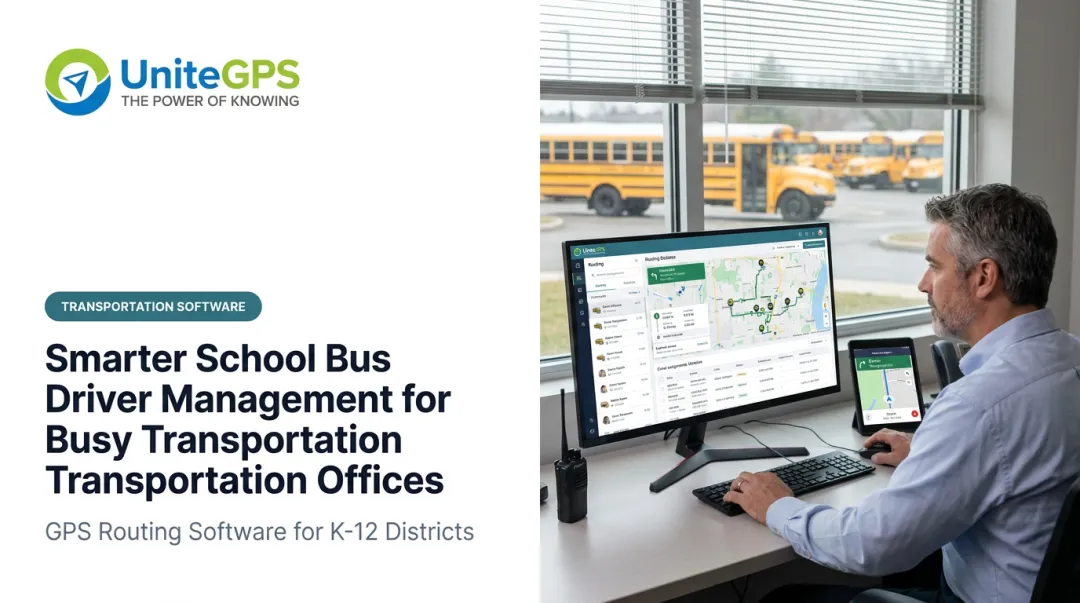
This is where day-of dispatching earns its keep. A sub driver gets a printable stop manifest with turn-by-turn directions, student names, schools, and scheduled stop times, plus live tablet navigation with audible guidance on the Full Suite. Either way, a driver who has never run the route can complete it accurately without pulling over to call dispatch.
How long does implementation take, and what does setup require from us?
Less than most directors fear. The implementation team sets up your routes and the data feed and pre-assigns the GPS devices, so the heavy lifting isn't on you or your staff. The point is to make the launch feel manageable, not like a second full-time job. Cloud setup can go live in weeks; timelines stretch mainly with data migration and SIS complexity, so ask for a realistic date up front.