It's 6:15 a.m. and three drivers have already called out sick. Dispatch is staring at a whiteboard that hasn't been updated since Friday, trying to figure out who covers Route 12 and whether the sub who filled in last month even remembers where the Hendricks Street stop is. The phone starts ringing before the first bus leaves the lot.
This scenario plays out in transportation offices across the country every week. Districts are managing driver shortages, mountains of compliance paperwork, and a steady stream of parent calls, often with the same staff they had five years ago. A recent industry survey found that 81% of school administrators reported an ongoing driver shortage, according to School Bus Fleet's 2025 driver shortage analysis.
This article breaks down the biggest driver management pain points and the smarter, tech-driven approaches busy offices are using to solve them.
Key Takeaways
- Driver shortages and manual scheduling create daily scrambles that cost transportation offices hours every week
- Substitute drivers unfamiliar with routes cause delays, missed stops, and safety risks
- Tablet navigation, automated scheduling, and SIS sync cut coverage gaps when regular drivers are out
- Real-time tracking cuts parent phone calls and frees up office staff
- Compliance-ready ridership data supports Medicaid reimbursement and turns required records into recoverable revenue
What Is School Bus Driver Management?
School bus driver management is the ongoing process of scheduling, communicating with, training, and monitoring compliance for every driver who operates a district route, whether they drive daily or fill in occasionally.
This is different from vehicle fleet management. Fleet management deals with the buses themselves: maintenance schedules, fuel, inspections. Driver management deals with the people behind the wheel and how they're assigned, briefed, and supported.
Core tasks typically include:
- Shift and route assignment — matching drivers to specific runs each day
- Certification tracking — keeping CDLs, medical cards, and training current
- Real-time communication — relaying delays, changes, and emergencies
- Onboarding — getting new or substitute drivers ready to run a route safely
Get any one of these wrong and the ripple effect hits students, parents, and school administrators within minutes.
Top Challenges Transportation Offices Face in Managing Drivers
Driver management rarely fails for one reason. Shortages, paper schedules, compliance paperwork, and radio silence stack up until the office spends the morning reacting instead of running routes.
Driver Shortages Stretch Coverage Thin
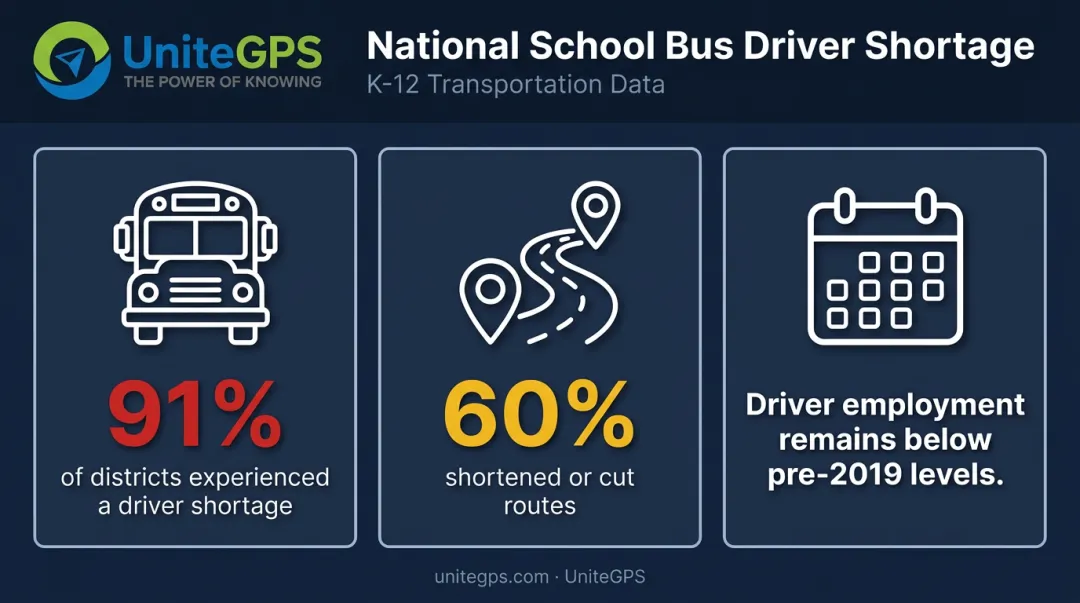
The shortage isn't a rumor. HopSkipDrive's 2024 State of School Transportation Report found that 91% of surveyed districts experienced a driver shortage, and 60% of school leaders said it required shortening or cutting routes entirely. School-bus-driver employment nationally still sits below pre-2019 levels.
Fewer drivers means existing staff pick up extra runs—overtime, fatigue, and burnout on an already thin bench. When someone calls out, a substitute often inherits a route they have never driven:
- Which stop comes next on a winding elementary run
- Which house needs extra time for a student with mobility needs
- Where the road narrows or the turnaround gets tight
That unfamiliarity slows mornings, raises the chance of missed or out-of-order stops, and puts more pressure on dispatch to coach every turn over the radio.
Manual Scheduling and Communication Break Down Fast
Spreadsheets, whiteboards, and phone trees work until something changes—and something always changes. Manual systems create avoidable errors:
- Double-booked routes when two dispatchers update different copies
- Missed pickups when a swap never reaches everyone
- Last-minute scrambling every time a driver calls out
The same gap shows up mid-route. When a bus hits traffic or a mechanical issue, dispatch needs the alert immediately and the driver needs new instructions just as fast. Without real-time visibility, a small delay becomes missed connections, confused parents, and a phone bank full of "Where's the bus?" calls that pull staff off actual dispatch work.
Certification Tracking Is a Quiet Time Sink
Districts must verify and retain background clearances, CDL status, and medical certifications for every driver, including contractor-employed ones. Pennsylvania's Auditor General has flagged this as an ongoing compliance duty districts can't skip, even while scrambling to fill vacancies. The work is necessary—and it steals hours from routing and coverage planning when records live in folders, inboxes, or disconnected spreadsheets.
Key Features of a Smarter Driver Management System
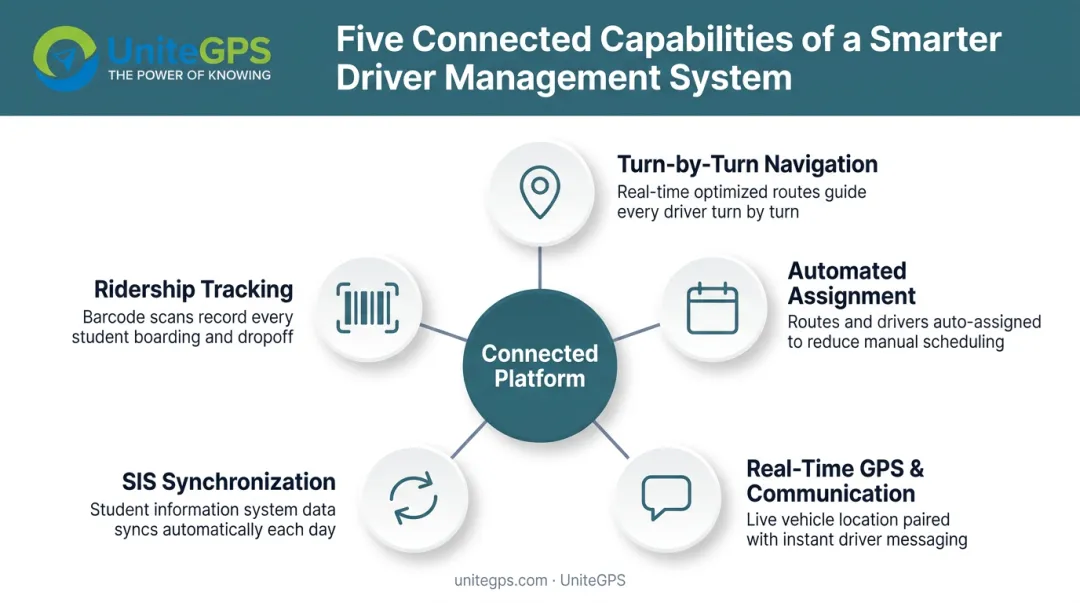
Technology built for K-12 transportation tackles these pain points as one connected system—navigation, assignment, communication, and ridership—rather than patching each gap with a separate tool.
Turn-by-Turn Navigation for Any Driver
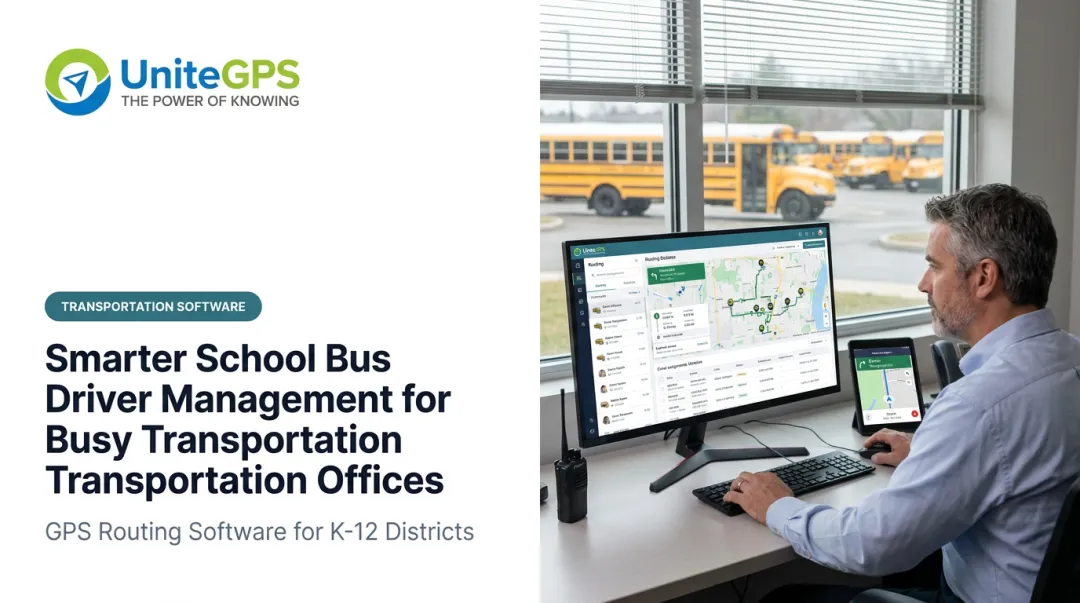
Tablet-based navigation lets a substitute run an unfamiliar route accurately on day one. The tablet displays the full path, calls out audible turn directions, and shows exactly which student to expect at each stop. No memorization required.
Automated Route and Driver Assignment
When a driver calls out, automated assignment tools eliminate the spreadsheet scramble. When stops change, tools like Stop Time Automation recalculate route timing instantly so dispatch is not rebuilding schedules by hand.
Real-Time GPS and Two-Way Communication
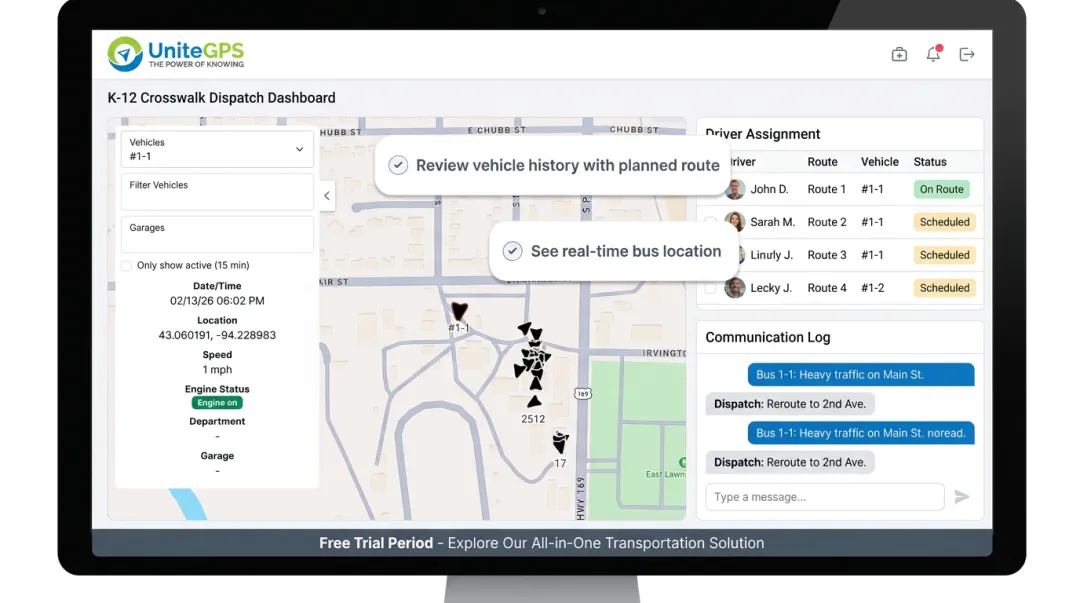
A centralized Communication Center lets dispatch message drivers directly, push automated alerts to parents, and keep a searchable log of every exchange. Live GPS tracking shows exactly where every bus is at any moment.
SIS Synchronization
Automatic sync with platforms like PowerSchool, Skyward, and Infinite Campus keeps rosters and stop assignments aligned with the district's enrollment data. No manual re-entry when a student moves or transfers.
Ridership Tracking for Safety and Billing
Barcode or card-swipe scanning logs exactly which student boarded which bus and when. That data supports both daily safety verification and Medicaid reimbursement documentation.
UniteGPS Crosswalk K-12 brings these capabilities together so transportation offices run navigation, scheduling, communication, and ridership from one place instead of juggling disconnected tools.
How Smarter Driver Management Saves Time and Money
The time savings start with scheduling. Automated route and driver assignment removes the hours transportation staff spend each week manually reshuffling coverage every time someone calls out.
Substitute navigation tools cut onboarding time too. A sub who can follow tablet-guided turns and see student names at each stop doesn't need a ride-along or a phone call to dispatch mid-route. That prevents delays before they start.
The staffing and budget impact shows up in hard numbers:
- Digital trip logs and push notifications cut "Where's my bus?" calls by roughly 25%, per School Bus Fleet's coverage of parent routing apps
- Leander ISD projected more than $1 million in annual savings and eliminated 21 routes after optimization (School Bus Fleet report)
- Accurate boarding records support Medicaid billing for eligible special education transportation
Fewer parent calls free office staff to focus on dispatch instead of phone tag. Ridership data turns a compliance chore into a documented reimbursement opportunity.
The Role of a Transportation Manager in Driver Oversight
A transportation manager oversees hiring, scheduling, training, safety compliance, and day-to-day driver coverage. Driver oversight sits at the center of that work—and it shapes nearly every morning run the district puts on the road.
The same person also coordinates drivers, school administrators, and parents. When a parent complains about a late bus or a principal needs a route change, the manager fields it. Clear communication tools keep those requests from derailing driver schedules.
Technology changes what the job looks like day to day:
- Before: Answering angry calls, chasing substitute coverage, fixing scheduling errors after they happen
- After: Reviewing dashboards, planning for known gaps, spending time on strategy instead of damage control
Moving from reactive firefighting to proactive planning frees managers to coach drivers, fill gaps earlier, and keep routes stable.
Choosing the Right Driver Management Platform for Your Office
Not every platform fits every district. A few criteria matter more than the sales pitch:
- Ease of use for drivers and dispatch — if the tablet interface confuses substitutes, it defeats the purpose.
- **Integration with existing SIS and routing systems** — manual data entry should disappear, not multiply.
- Reliable live support — driver issues happen at 6 a.m. and during snowstorms, not just business hours.
Evaluate vendors on responsiveness and long-term partnership rather than the lowest sticker price. A cheaper platform that leaves you on hold during a Tuesday morning crisis isn't actually cheaper.
UniteGPS offers a 90-day free trial with routes built by their team at no cost, plus unlimited live support with no ticket queues. It's a low-risk way to test whether a smarter approach actually fits your office before signing anything.
Frequently Asked Questions
What is a bus management system?
A bus management system is software that combines routing, GPS tracking, driver scheduling, and communication tools to run student transportation efficiently. It replaces manual spreadsheets and whiteboards with a single connected platform.
What is the role of a transport manager in a school?
A transport manager hires and schedules drivers, keeps certifications current, and oversees routes. They also act as the hub between drivers, administrators, and parents on day-to-day operations.
How does GPS tracking help substitute bus drivers?
GPS-guided, turn-by-turn navigation lets substitutes follow exact routes and stops without prior route knowledge. The tablet shows the full path and identifies which student to expect at each location.
What qualifications do school bus drivers need?
Drivers typically need a Commercial Driver's License with school bus (S) and passenger (P) endorsements, a background check, and state-specific training. FMCSA also requires entry-level driver training for first-time endorsement applicants.
How can transportation offices reduce driver turnover?
Simplify daily tasks, cut stress from unclear routes, and give drivers reliable navigation tools. When substitutes can run a route confidently on day one, offices spend less time recruiting and covering open shifts.
How much time can driver management software save a transportation office?
Automating scheduling, route assignment, and communication can save teams hours every week. Automatic stop-time recalculation alone removes manual work that used to consume entire mornings.