Introduction
Picture this: one adult, 40 to 70 kids, zero co-teachers, and a 12-ton vehicle to operate safely through traffic, weather, and railroad crossings. That's the daily reality for school bus drivers, and it's one of the hardest jobs in K-12 education.
Districts are feeling the strain. Behavior incidents are climbing, driver shortages are making it harder to pair troubled routes with experienced staff, and rule enforcement often varies wildly from bus to bus. Students notice the inconsistency fast, and they test it.
This guide gives transportation directors and drivers a practical, field-tested framework: how to set rules that stick, manage behavior calmly, use technology to reduce distractions, and keep schools and parents in the loop. No fluff, just what actually works on a moving bus.
Key Takeaways
- Consistent rules paired with calm de-escalation resolve most on-bus behavior problems before they escalate.
- Learning student names and showing genuine interest costs nothing but pays off daily in cooperation.
- Real-time GPS visibility and ridership tracking cut driver distractions and parent phone calls.
- Documented incident reports protect drivers legally and give administrators data to act on.
Why Student Management Is Central to the Bus Driver's Role
Teachers have co-teachers, aides, and four walls. Bus drivers have none of that. They're supervising a packed vehicle full of kids from multiple grade levels while simultaneously navigating traffic, all with their eyes forward and hands on the wheel.
That split attention is the core challenge. A driver can't turn around to break up a shoving match the way a teacher can step between two students in a hallway. Every second of distraction on the road carries real safety risk.
The stakes go beyond safety in the moment. Behavior management difficulties are a recurring theme in why drivers quit.
A 2019 NIJ-funded study of transportation directors found weak administrative support, inconsistent discipline follow-through, and lack of respect among the top frustrations cited nationally. Recruiting struggles have left many districts short-staffed for years.
With fewer drivers covering more routes and less consistent backup, standardization becomes non-negotiable. When a district relies on driver instinct alone to manage behavior:
- Substitute drivers walk into routes with no idea what's already been established
- Students quickly learn which drivers enforce rules and which ones don't
- Administrators lack any real record when a parent disputes what happened
A written, district-wide approach solves all three problems at once.
Setting Clear Rules and Expectations From Day One
Vague rules invite testing. Specific, non-negotiable safety rules reduce distraction-related incidents before they start. The basics matter most:
- Stay seated, facing forward
- Keep aisles and exits clear
- Lower voices to a hush near railroad crossings and stops
- Follow the driver's instructions the first time they're given
These aren't arbitrary. A national study of transportation directors found that basic rule violations were the single most common behavior problem reported. Roughly two-thirds of surveyed districts described them as common, well ahead of fighting or substance-related incidents.
Most bus behavior problems aren't dramatic. They're small, everyday violations that compound over a route.
Consistency across every driver in the district matters just as much as the rules themselves. If one driver lets kids stand while another enforces seated riding, students learn to save their worst behavior for the lenient bus. That inconsistency erodes trust fleet-wide and makes every driver's job harder.
Teaching and Reinforcing Expectations Throughout the Year
Rules only work if they're taught, not just posted. A few proven tactics:
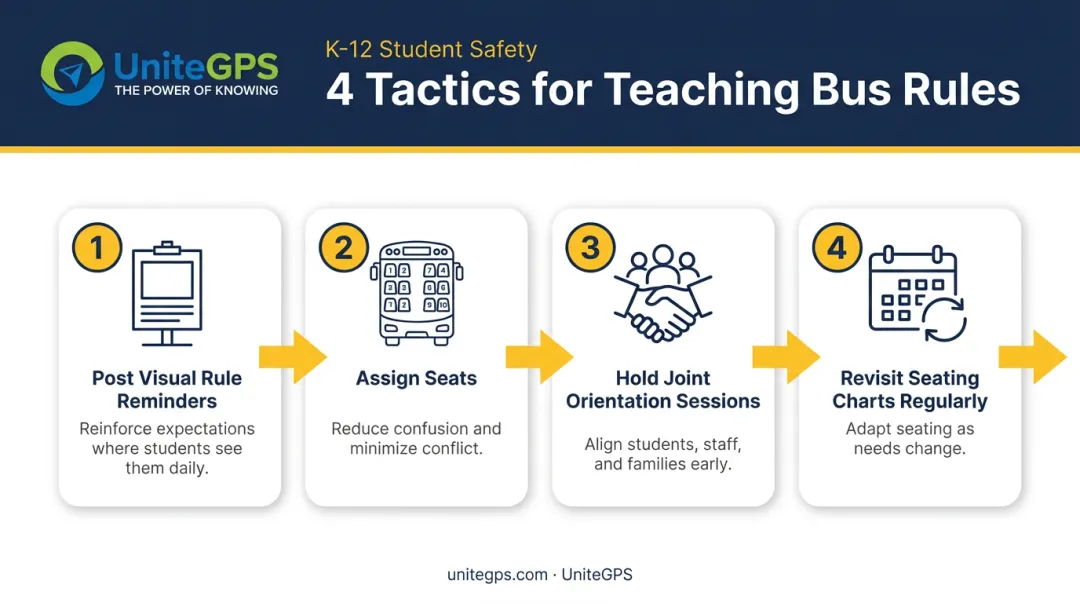
- Post visual rule reminders near the front of the bus, where every student can see them getting on and off.
- Assign seats, especially for younger riders or high-conflict routes. It removes the daily scramble for "my seat" and separates students who don't mix well.
- Hold joint orientation sessions with teachers before the school year starts, so classroom and bus expectations match.
- Revisit seating charts every grading period, or immediately after a behavior spike, rather than waiting until next semester.
Transportation offices should also issue every driver a written behavior policy and send families a matching parent-facing rules sheet. When the same document lives in every driver's binder and every parent's inbox, there's no ambiguity about what's expected.
Proven Behavior Management Techniques for the Bus
Rules set the baseline. What happens in the moment, how a driver actually responds to a disruption, determines whether a route stays calm or spirals.
Building Rapport From the First Day
Greeting kids by name sounds simple, almost too simple to matter. It matters. Students who feel recognized as individuals, not just bodies to transport, are far less likely to act out against a driver they respect.
The evidence backs this up. A study of a rural middle school's bus program combined relationship-building training, including a 4:1 ratio of positive to negative interactions, with posted expectations and light rewards. The result: daily discipline referrals dropped from 0.9 to 0.2 per bus, and after a brief pause and reintroduction, referrals fell to zero.
Learning five names in the first week costs a driver nothing. It's the highest-return investment available.
Using Positive Reinforcement Systems
Small, frequent rewards beat one big prize every time. Districts have had success with:
- "Bus bucks" redeemable for small prizes or privileges
- Seat privileges, like earning a spot near a friend for a week of good behavior
- Driver-nominated recognition, where the driver calls out a student's good choice by name
The key is consistency, not size. A sticker handed out weekly builds a habit; a pizza party once a semester doesn't.
De-escalation and Progressive Discipline
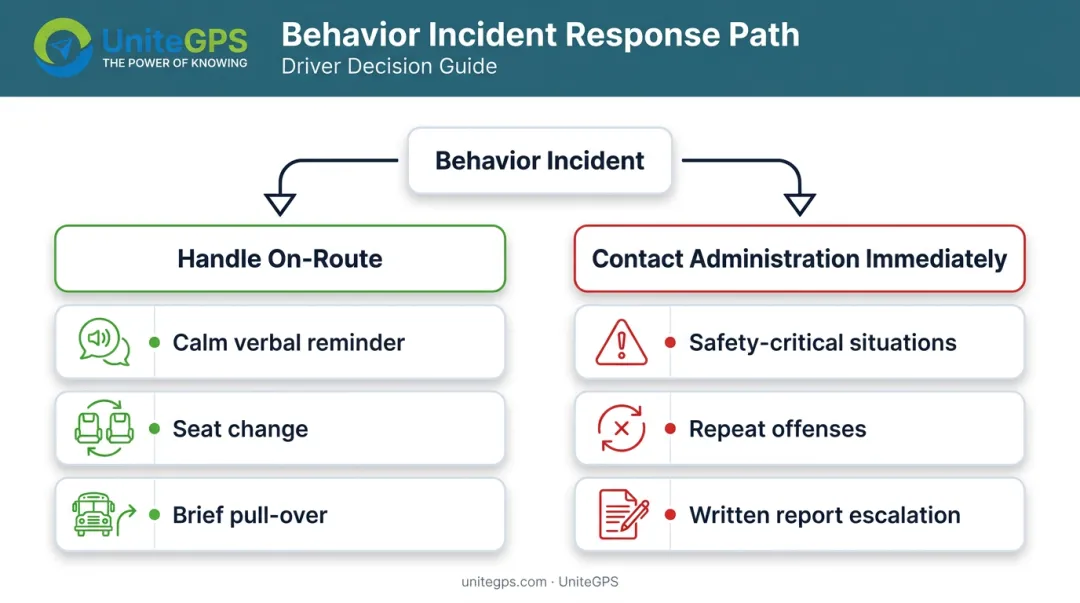
The single most useful mindset for a driver in a tense moment: respond, don't react. A student yelling from the back doesn't need a yelling match back. What works is closer to, "I hear you're upset. Let's talk about it once we're at the next stop." Calm, brief, and non-confrontational.
Districts should standardize what happens next so every driver, permanent or substitute, follows the same path:
- Verbal reminder — a quiet, specific correction
- Seat change — moving the student away from whoever they're escalating with
- Written report — documented and sent to the transportation office
- Administrator involvement — for repeat or serious issues
This model keeps small issues small and makes sure serious ones get real follow-through instead of getting lost.
Non-Verbal and In-the-Moment Techniques
Not every problem needs words. A driver can often defuse a situation using:
- A glance in the mirror that says "I see you"
- Direct eye contact through the rearview mirror as a student boards
- A brief, safe pull-over to address the issue, then resume the route
For routes where behavior challenges are frequent, pairing the driver with a bus monitor or paraprofessional is often the most effective fix. Someone else can manage students while the driver stays focused on the road.
Leveraging Technology to Simplify Student Management
How Technology Simplifies Student Management
Paper attendance sheets and handwritten behavior notes create gaps. When a parent calls with a complaint three days later, a driver relying on memory and a clipboard is at a real disadvantage.
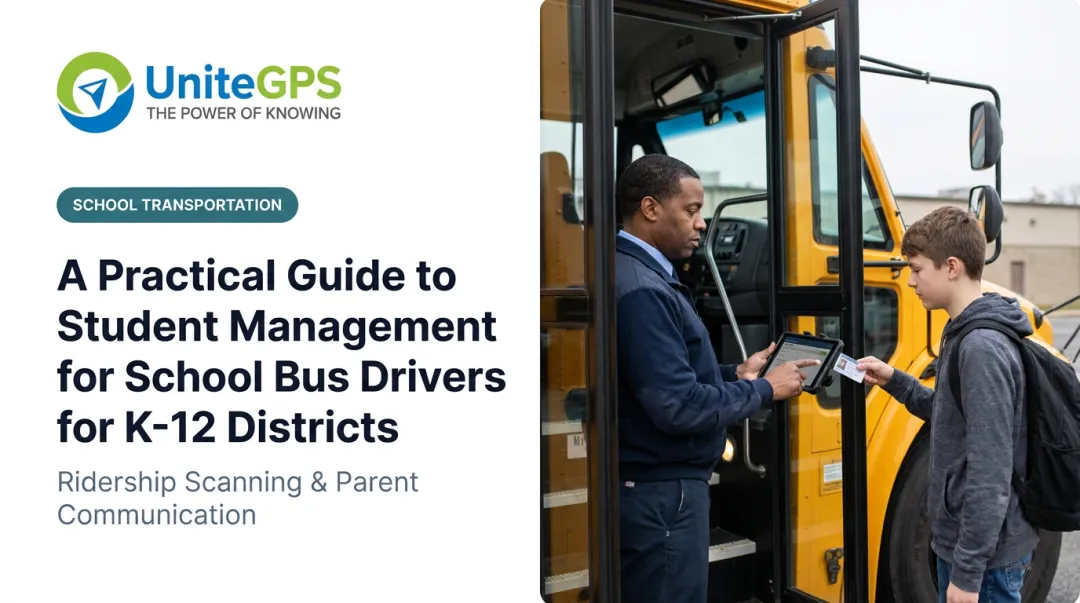
Tablet-based ridership scanning solves the data problem at the source. With systems like UniteGPS's Crosswalk platform, students scan a barcode—an ID card or a code on a phone—when boarding and exiting. Every scan is timestamped, confirming which student was on which bus and when. Students who forget their card aren't lost in the shuffle; the system still tracks them securely, even on an unassigned bus.
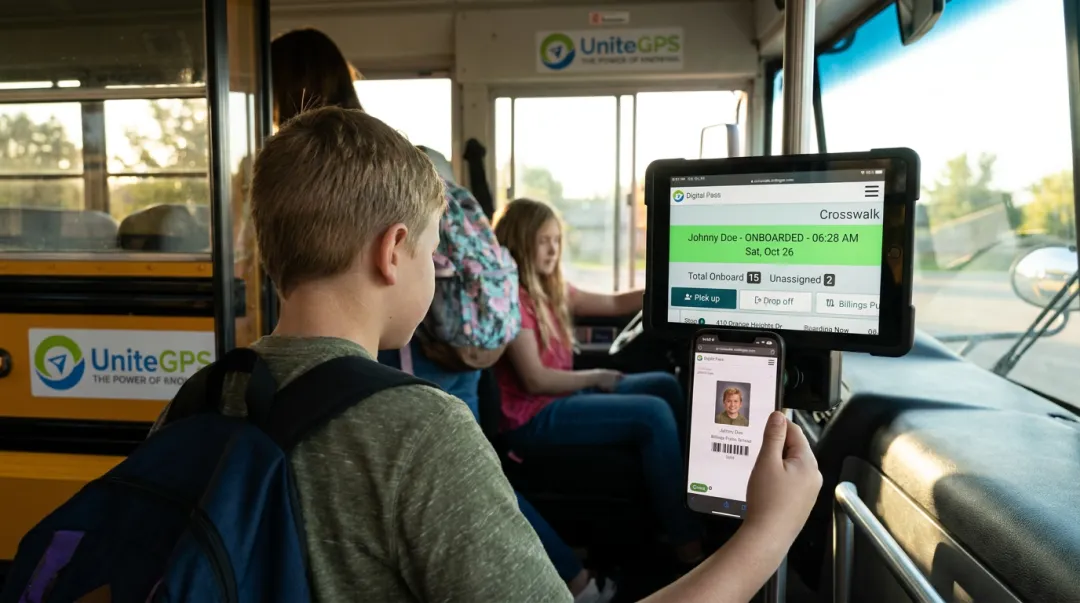
That single change frees drivers from paperwork so they can watch the road and the kids.
Real-time GPS tracking cuts distraction from another angle: the phone. When parents can see exactly where the bus is, the "where's my kid" call disappears before it starts. One documented example found that after a district rolled out a bus tracking app, parent calls to the transportation office dropped by 75%. Fewer mid-route calls mean fewer distractions when full attention matters most.
Documented data does double duty for administrators. Ridership and incident records aren't just for resolving disputes:
- Give administrators reliable patterns to spot repeat behavior problems
- Support Medicaid reimbursement for special education transport with scan-verified, billing-ready boarding records
- Provide objective proof when a parent's account doesn't match what happened
SIS integration removes another manual burden. When a district's Student Information System connects directly to the routing platform, rosters update automatically as students enroll, transfer, or move. Drivers get accurate passenger lists without staff re-entering data by hand—something platforms like Crosswalk are built to support.
Collaborating With Schools, Parents, and Handling Special Situations
Bus behavior doesn't happen in a vacuum. A student acting out on the bus is often the same student struggling in the classroom, and vice versa.
A working feedback loop between drivers, teachers, and administrators keeps expectations consistent. If a teacher knows a student had a rough ride that morning, they can address it before class starts instead of being blindsided later.
Regular, transparent parent communication matters just as much, in both directions. A note home about good behavior builds goodwill; a fast, factual call about an incident builds trust, even when the news isn't good. Silence, or worse, inconsistency, is what breeds disputes.
Special accommodations need equal attention:
- Students with IEPs, 504 plans, or sensory needs may require visual countdown tools, specific seating, or calm-down strategies
- Federal law treats transportation as a related service under IDEA, meaning accommodations in a student's IEP aren't optional extras
- Drivers handling these routes need real training on the specific plan, not a generic briefing
Every district also needs a clear escalation protocol. Drivers should know, without hesitation, which issues they handle on-route with a calm word and which ones require pulling over and contacting administration immediately. That clarity protects students and drivers while keeping the system consistent no matter who's behind the wheel.
Frequently Asked Questions
What do school bus drivers do after dropping off students?
Drivers complete a post-trip inspection to check for students left aboard, submit ridership and behavior reports, refuel, and prepare the vehicle for the next run.
What is the hardest part of being a school bus driver?
Supervising dozens of students alone while fully focused on driving, often through traffic, weather, and tight schedules, is consistently the toughest part of the job.
How can bus drivers handle difficult behavior without pulling over the bus?
Non-verbal cues like mirror eye contact, brief verbal reminders, and seat changes handle most issues. Full stops should be reserved for safety-critical situations only.
What bus rules should never be negotiable for student safety?
Staying seated, keeping aisles clear, lowering voices near railroad crossings, and following driver instructions promptly are core non-negotiables every district should enforce.
Can technology really help drivers manage student behavior?
Yes. Ridership tracking and GPS visibility reduce distractions from parent calls and give administrators reliable data to address repeat problems and support their drivers.
How should bus drivers document a behavior incident?
Reports should be timely, factual, and include the date, time, and actions taken. Logging incidents through a digital system keeps documentation consistent fleet-wide.