Key Takeaways
- Driver employment remains 9.5% below 2019 levels even as wages hit $22.45/hour (4.2% real annual growth)
- Split shifts, CDL training barriers, low annual income, and accelerated retirements drive the shortage
- Students needing specialized transport and those from vulnerable populations face the most disruption
- Successful districts pair competitive pay, flexible schedules, and tech—not hiring alone
- Route optimization, live GPS, and automated alerts help districts stretch limited driver capacity
Understanding the Current State of the School Bus Driver Shortage
EPI's analysis of Bureau of Labor Statistics data shows 202,076 school bus drivers employed in August 2025, down from 223,252 in August 2019. Districts added about 2,300 positions over the past year, but the recovery is still incomplete.
Private-sector contractors took the steepest hit, losing 12,800 positions (a 28.8% drop). Public-sector employment fell 4.6%.
The pressure is uneven by geography. States like Maine, Missouri, and Vermont face especially hard conditions, with some districts cutting routes or suspending service entirely.
Rural districts feel it most, along with fleets that serve students with disabilities, students experiencing homelessness, or students who need specialized medical transportation.
Recent wage gains help, but they have not closed the gap. The median hourly wage reached $22.45 in August 2025—4.2% real growth year over year and the fastest rise since the pandemic began.
Higher hourly rates still miss the core constraint: most school bus jobs are limited to morning and afternoon shifts, so annual earnings stay capped even when the hourly rate looks competitive.
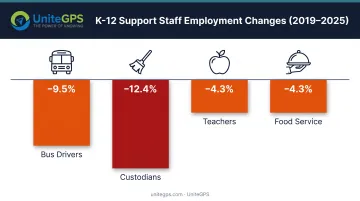
That lag stands out against broader K-12 employment. Overall education employment is 1.4% above 2019 levels, yet key support roles still trail:
- Bus drivers: -9.5%
- Custodians: -12.4%
- Teachers: -4.3%
- Food service: -4.3%
Earlier national survey data already pointed to how widespread the strain had become. A 2021 joint survey by NAPT, NASDPTS, and NSTA found that 51% of nearly 1,500 respondents described conditions as "severe" or "desperate," 78% said the shortage was worsening, and only 1% reported no driver shortage at all.
Root Causes Behind the Persistent Shortage
Compensation Gap: Hourly Pay vs. Annual Earnings
The real compensation problem is total annual income, not the hourly rate. School bus drivers earned a median annual wage of $47,040 in 2024, but the Bureau of Labor Statistics notes that hours are often limited to when school is in session. That puts drivers at a clear disadvantage next to warehouse, delivery, and logistics roles that offer full-time hours year-round.
Consider the alternatives available to CDL-seeking workers:
- Light-truck delivery drivers: $44,140 median annual wage with consistent full-time hours
- Warehouse material movers: $37,680 annual median ($18.12/hour) with no CDL requirement
- Commercial truck drivers: Full-time schedules and year-round miles with more predictable income
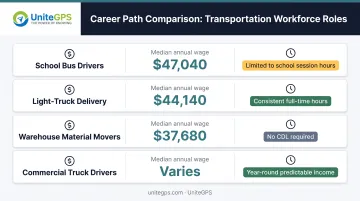
A worker evaluating these options sees school bus driving as a part-time commitment with seasonal gaps, not a sustainable full-time career.
CDL Training: Barriers to Entry
Federal Entry-Level Driver Training (ELDT) requirements mandate that first-time Class B CDL applicants and those seeking passenger (P) and school-bus (S) endorsements complete registered training programs. While these standards ensure safety, they create friction in the hiring pipeline.
Challenges include:
- Training capacity constraints: Limited slots at community colleges and commercial driving schools
- Testing backlogs: DMV appointment delays extend the timeline from application to licensure
- Time investment: Candidates must balance weeks of training with existing work or family obligations
- Cost barriers: Though some districts now cover training costs, upfront expenses deter prospective drivers without financial support
The Split-Shift Problem
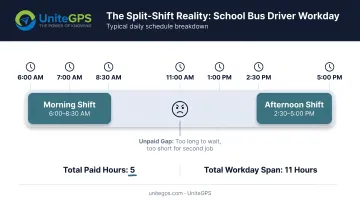
The morning-and-afternoon route structure creates a planning nightmare for drivers. A typical schedule might require work from 6:00–8:30 AM and 2:30–5:00 PM, leaving a mid-day gap too long to wait at the depot but too short for meaningful second employment. This structure:
- Prevents full-time income despite long workdays
- Makes the position incompatible with family responsibilities or other jobs
- Limits the candidate pool to retirees, parents with school-age children, or those with flexible second income sources
Aging Workforce and Lost Institutional Knowledge
Experienced drivers who retired during the pandemic left more than open seats. They took decades of route familiarity, student relationships, and crisis-response instincts with them.
New drivers need months to build that same operational fluency. Meanwhile, districts still have to recruit, train, and retain enough people to replace those veterans.
Pandemic-Era Disruptions Continue
COVID-19 slowed training pipelines and permanently raised worker expectations around flexibility, remote options, and employer support. School bus driving, with rigid schedules, in-person requirements, and little schedule flexibility, competes poorly in that labor market.
Impact on Students and District Operations
Driver shortages force districts into difficult operational trade-offs that directly affect students. Route consolidation (combining two routes into one to match available drivers) leads to:
- Longer ride times that cut into sleep, homework, and family time
- Overcrowded buses that raise noise, stress, and behavior challenges
- Inconsistent schedules from last-minute absences that leave families scrambling
Young children and students with anxiety feel these disruptions most acutely.
Transportation directors absorb the operational fallout: dispatcher overload, a surge in parent complaints, and administrators pulled in as substitute drivers.
Disproportionate Impact on Students with Disabilities
Students whose Individualized Education Programs (IEPs) require specialized transportation depend on predictable routines, trained drivers familiar with their needs, and appropriate vehicle accommodations. Shortages make this consistency nearly impossible to maintain. When trained drivers aren't available, districts must:
- Assign substitutes unfamiliar with students' medical, behavioral, or communication needs
- Consolidate specialized routes, extending ride times for medically fragile students
- Delay service while scrambling to find qualified coverage
These disruptions can trigger regression in students' progress, increased family stress, and in severe cases, inability to attend school at all.
Transportation and Chronic Absenteeism
Unreliable bus service drives chronic absenteeism, especially among vulnerable populations. Research from Michigan analyzing 380,909 student-year observations found that bus eligibility reduced chronic absence by 1.4 percentage points overall and by nearly 4 percentage points among economically disadvantaged students. When shortages disrupt service, those attendance gains disappear.
Students experiencing homelessness, those in foster care, and those from families without reliable personal transportation face the greatest risk. Federal law requires districts to transport students in foster care to their school of origin, but driver shortages make compliance difficult, forcing families to choose between legal rights and practical reality.
In Hawaii, a 2024 shortage disrupted transportation for 3,720 public-school students. The state eventually restored service to 88% of affected students, but the weeks-long disruption illustrated how quickly shortages cascade into absenteeism crises.
Recruitment and Retention Strategies That Work
Districts that successfully navigate the shortage use multi-layered approaches rather than relying on any single solution.
Competitive Compensation and Incentives
Competitive pay and incentives help districts compete with warehouses, delivery fleets, and other CDL employers:
- Signing bonuses: Alexandria City Public Schools offered $5,000 recruitment bonuses for new drivers in 2024-25
- Retention incentives: Washington County School District in Utah provided $500 retention bonuses at 350-699 hours and $1,000 at 700+ hours
- Referral rewards: Cash rewards for successful hires turn current drivers into recruiters
- Guaranteed minimum hours: Paid floor hours steady income when routes run short
- Benefits packages: Health insurance, retirement contributions, and PTO close the gap with full-time private-sector roles
Creative Scheduling Solutions
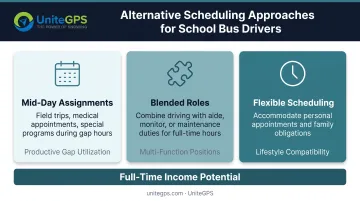
Rethinking the workday helps districts offer more full-time positions:
- Mid-day assignments: Drivers transport students to field trips, special programs, or medical appointments during traditional gaps
- Blended roles: Combining driving with aide, monitor, or light maintenance duties creates full-time positions
- Flexible scheduling: Accommodating drivers' personal needs (medical appointments, family obligations) improves retention
Expanded Recruitment Pipelines
Wider pipelines pull candidates who would not apply through standard job posts:
- Community college partnerships: Alabama's state community-college program mixed online theory with behind-the-wheel training, produced 145 completers, and supplied 100+ school systems
- Veteran outreach: Military veterans often have CDL experience and value service-oriented roles
- Retiree recruitment: Missouri passed legislation allowing retired public-school staff to return full-time for up to four years without losing retirement benefits
- CDL training cost coverage: Eliminating the financial barrier expands the candidate pool significantly
Technology Solutions and Operational Efficiency Strategies
Technology doesn't replace drivers, but it helps districts operate more reliably with limited staff.
GPS Tracking and Real-Time Visibility
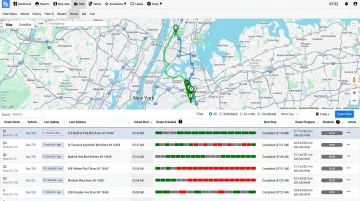
GPS tools expand what dispatchers can handle during shortages. When a driver is absent or late, they need immediate visibility into which routes are uncovered and which vehicles are free for reassignment. Real-time tracking provides:
- Fleet status at a glance: See which buses are moving, where they are, and whether they're on schedule
- Faster response: Spot problems before delays cascade into missed pickups
- Substitute confirmation: Verify backup drivers reached their assigned routes
- Accurate family ETAs: Share arrival updates when schedules change
Route Optimization and Ridership Planning
Route optimization helps districts stretch limited driver capacity by cutting inefficiency:
- Shorter routes: Analyze travel patterns and consolidate stops to reduce total miles and driver hours
- Balanced workloads: Distribute students evenly so no route becomes overextended
- Instant recalculation: When stops change, software updates downstream arrival times and removes hours of manual schedule work
Historical data sharpens that planning. It shows which routes run short-staffed, which stops create delays, and which drivers have the strongest attendance records.
Ridership tracking adds another layer: actual boarding patterns, not just planned assignments. Districts can see which routes have consistently low usage and might consolidate, where demand concentrates, which stops inflate route duration, and how changes affect who boards. That evidence supports hard conversations about service adjustments when driver availability falls short of ideal staffing.
Communication Tools and Integrated Platforms
Manual outreach (driver assignment calls, delay messages to parents, answers to "where is my bus?") consumes dispatcher time that belongs on operational problems. Automated platforms cut that load:
- Direct assignment pushes: Send route assignments to driver phones without one-off calls
- Automatic parent alerts: Cut inbound call volume when delays hit
- Centralized message logs: Keep accountability and a clear communication history
- More decision time: Leave routine updates to the system so staff can act on exceptions
Larger operations often need these capabilities in one place. Districts managing complex fleets use integrated platforms that combine routing, GPS tracking, ridership data, and Student Information System (SIS) sync into a single hub. Platforms like UniteGPS give transportation directors that visibility by:
- Syncing enrollment, addresses, and school assignments automatically through SIS integration
- Balancing loads and cutting unnecessary mileage with route tools built for lean driver pools
- Giving families live arrival information that lowers complaint volume during shortage-driven delays
- Documenting ridership for Medicaid and IEP billing when specialized transportation is disrupted
None of this fills empty driver seats. Districts that adopt these tools do keep service more consistent with the staff they already have.
Alternative Transportation Models and Multi-Layered Approaches
No single alternative replaces traditional yellow-bus service, but strategic options fill specific gaps.
Parent Reimbursement Programs
Districts like Philadelphia offer $300/month ($3,000/year) for full parent transport or $150/month ($1,500/year) for AM-only service. That flexibility can shrink the number of routes the district must staff and run.
Limitations include:
- Not viable for families without reliable vehicles
- Requires stable schedules and availability
- Excludes students whose parents work early shifts or lack transportation
- Creates equity concerns if only affluent families can participate
Vetted Alternative Transportation Services
Some districts use specialized providers for specific populations:
- Students with disabilities who need 1:1 service when trained drivers aren't available internally
- Long-distance out-of-district placements for foster students or specialized program attendees
- Medically complex trips that require nurses or specialized equipment
These arrangements still face state licensing, background checks, medical clearance, and insurance requirements. Costs often exceed traditional district-operated service.
Blended, Multi-Layered Systems
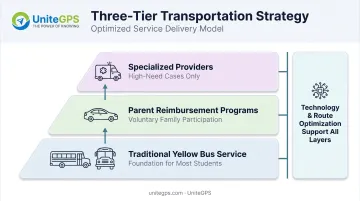
The most resilient districts don't abandon yellow-bus fleets. They keep traditional service as the foundation, then add alternatives, technology, and efficiency gains so the system still works when drivers are short. This approach:
- Prioritizes traditional bus service for students most dependent on it
- Uses parent reimbursement for families with capacity to opt in
- Deploys specialized providers only where no other option exists
- Optimizes routes and communication to maximize driver productivity
- Builds flexibility into planning so shortages don't trigger immediate crisis
Building a Resilient Long-Term Transportation System
Districts cannot hire their way out of this shortage. Labor market realities, demographic trends, and structural job characteristics mean the shortage will persist for years. Resilient systems must be designed to operate reliably with limited staff.
Data-Driven Planning and Proactive Adjustments
Transportation directors need to:
- Track historical absence patterns to spot which days, seasons, or routes see the most driver unavailability
- Build schedule flexibility by planning routes for partial absences, not perfect attendance
- Use route analytics to catch inefficiencies before they compound during shortages
- Equip substitute drivers with clear route information and navigation tools
Boston Public Schools showed what data-driven optimization can deliver, removing 50 buses and saving nearly $5 million through algorithmic routing in 2017, without increasing average walking or ride times. Not every district will match those results, but the principle holds: evidence-based planning stretches existing capacity further.
Putting that planning into practice depends on tools and budgets that outlast temporary relief dollars.
Budget Realities and Return on Investment
ESSER pandemic relief funding has expired, forcing districts to make technology and operational investments from regular operating budgets. The case for investment rests on measurable returns:
- Cut administrative time with SIS integration and automated stop-time recalculation
- Improve payroll accuracy through GPS mileage tracking and time logs
- Reduce parent call volume with real-time bus tracking and proactive notifications
- Cover more students per hour worked through route optimization
These returns often pay for the tools themselves in understaffed transportation offices. Integrated K-12 platforms such as UniteGPS combine routing, GPS tracking, SIS sync, and parent notifications so districts capture several of these gains in one system.
Winning support for that spend means making the case beyond the transportation office.
Advocating for Sustainable Funding and Realistic Planning
Transportation directors should:
- Push for operating budgets that reflect true staffing costs, not pre-pandemic assumptions
- Set staffing targets that treat the shortage as structural, not temporary
- Invest in platforms that improve efficiency year after year, not one-time stopgaps
- Seek state-level support for CDL training partnerships, retiree-return incentives, and regulatory flexibility where safety allows
The shortage is not ending soon. Districts that accept this reality and build adaptable systems will serve students more reliably than those waiting for labor markets to return to 2019 conditions.
Frequently Asked Questions
Is there a school bus driver shortage in the US?
Yes. As of August 2025, the U.S. employs 21,200 fewer school bus drivers than in August 2019, a 9.5% decline. Private contractors saw a 28.8% drop, and about 80% of districts report some level of shortage.
What are the main causes of the school bus driver shortage?
Low annual earnings despite competitive hourly wages, split-shift schedules that block full-time income, CDL training time and cost, an aging workforce with rising retirements, and lasting pandemic-era labor shifts all drive the shortage.
How does the driver shortage affect students with disabilities?
Students who need specialized transportation face the greatest disruption. They rely on trained drivers familiar with their medical and behavioral needs, consistent schedules, and proper vehicle accommodations. Shortages undermine all three through route consolidation and substitute coverage.
What technology solutions help districts manage driver shortages?
GPS tracking gives real-time driver visibility for faster reassignments. Route optimization builds schedules around actual availability, and automated communication cuts dispatcher workload. Systems that combine routing, tracking, and ridership data support day-to-day operations under shortage conditions.
How can school districts improve driver recruitment and retention?
Competitive wages with signing and retention bonuses, paid CDL training, schedules with more full-time hours, partnerships with community colleges and veteran programs, and better working conditions through clearer communication and operational support all help.
What alternative transportation options are districts using?
Districts blend yellow buses with parent reimbursement programs (such as $300/month in Philadelphia), vetted alternative providers for specialized needs, and flexible service models. Most keep bus fleets as the foundation and use alternatives on high-need or low-capacity routes.